

- Cryptocurrency regulation is necessary
- The dispute over the way cryptocurrency is regulated was initiated by the director of FTX
- Institutions do not actually mind, but remain wary
- The crypto market is trying to expand
- Plans to get Buterin involved in regulation
Ethereum co-founder Vitalik Buterin spoke on Sunday about the regulatory debate surrounding cryptocurrency regulation, sharing his thoughts on which industry rules make sense and which do not.
Cryptocurrency regulation is necessary
Regulation can make cryptocurrency more acceptable to mainstream financial institutions and legitimize cryptocurrencies as an asset class. But new regulations and policies could also change the DNA of the industry, especially with regard to principles such as resistance to censorship and decentralization.
Buterin said he thinks preserving the latter should be a priority. “I don’t think we should be chasing large institutional capital at full speed with enthusiasm,” he said. “Regulation that frees up the crypto space to operate internally, but makes it more difficult for crypto projects to be accessible to the general public, is far less bad than regulation that interferes with the inner workings of crypto.”
The dispute over the way cryptocurrency is regulated was initiated by the director of FTX
Buterin’s Twitter thread came ten days after a controversial blog post by Sam Bankman-Fried, founder and CEO of cryptocurrency exchange FTX, in which he laid out his vision for regulating the industry.
Bankman-Fried subsequently capitulated to Twitter after receiving numerous negative comments.
Institutions do not actually mind, but remain wary
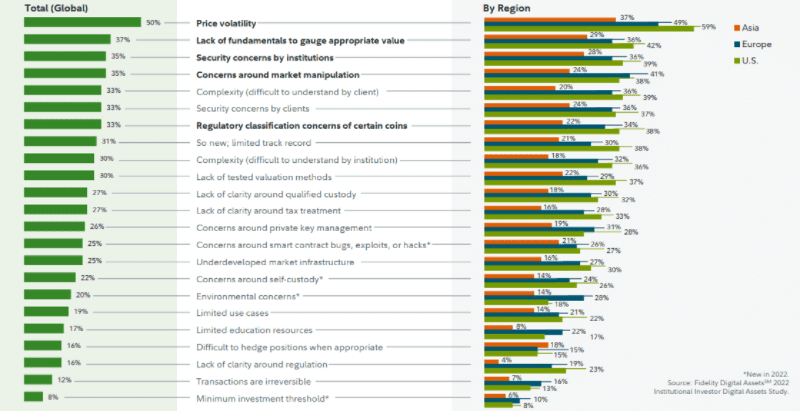
According to a new study by Fidelity Investments, regulatory uncertainty is seen as an obstacle for institutional crypto investing. A survey of institutional investors’ digital assets found that out of more than 1,000 institutional investors, 16% said lack of regulatory clarity was a barrier to investing in digital assets.
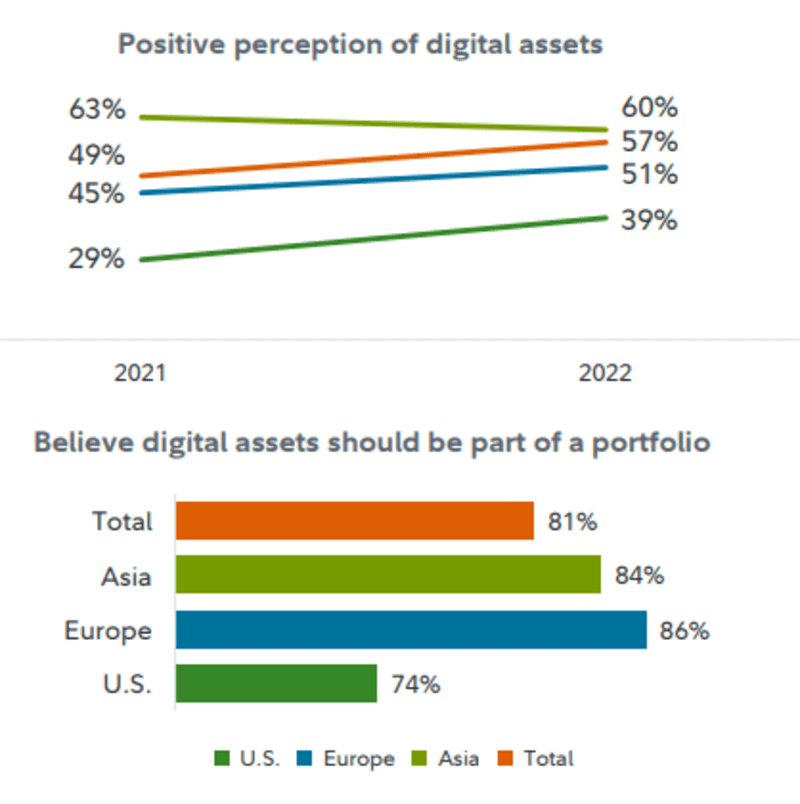
On the other hand, more than 8 in 10 (81%) of institutional investors surveyed believe that digital assets play an important role in investment portfolios. In addition, 43% of institutional investors said they would be interested in bitcoin-ETF.
The crypto market is trying to expand
Segments of the crypto industry have been seeking institutional capital for nearly a decade, ever since the Winklevoss twins first applied for an ETF-like bitcoin fund in 2013. While futures products are traded on the Chicago Mercantile Exchange, the Securities and Exchange Commission has delayed approval of a spot-based bitcoin ETF.
According to Buterin, that is not a bad thing. “I’m actually kinda happy a lot of the ETFs are getting delayed,” he said. “The ecosystem needs time to mature before we get even more attention.”
Buterin divided his policy goals for the crypto industry into two categories: providing better protection for consumers navigating the nascent industry and curbing the illicit flow of cryptocurrencies, which he said are not exclusive to the DeFi space.
To address the latter issue, Buterin is skeptical of the requirement that DeFi protocol interfaces adhere to Know Your Customer (KYC) standards. While such standards are used by financial institutions to prevent money laundering, fraud and corruption, and “hackers write custom code to interact with contracts,” bypassing the usual KYC barriers.
“It would annoy users but do nothing against hackers,” he said.
There are DeFi rules that Buterin believes could be more useful, such as limits on the amount of leverage a user can trade with, transparency in auditing code and requiring “knowledge-based tests” as opposed to “plutocratic net-worth minimum rules.”
Buterin said he is also in favor of regulating cryptocurrency in a way that further uses zero-disclosure proof, a cryptographic principle that preserves privacy.
Plans to get Buterin involved in regulation
Sam Bankman-Fried responded to Buterin’s remarks, saying he thought they “are pretty reasonable,” and expressed a willingness to invite the Ethereum co-founder to Washington, DC, to contribute to regulation.
“I think that policymakers/regulators would find it pretty interesting to hear from @VitalikButerin,” SBF stated. “he’s very different from the average person in DC, but in a kinda refreshing way—calmly and thoughtfully saying what he thinks.”
Buterin’s comments also seemed to win approval from Changpeng Zhao, founder and CEO of Binance, another leading cryptocurrency exchange. The CEO responded to the topic with a thumbs-up emoji.
Crypto investor Ryan Sean Adams also endorsed Buterin’s participation in the debate, saying Buterin could share his thoughts on Bankless, a DAO and crypto media project.
Adams strongly criticized Sam Bankman-Fried’s initial blog post, tweeting, “This absolutely sucks.”
