
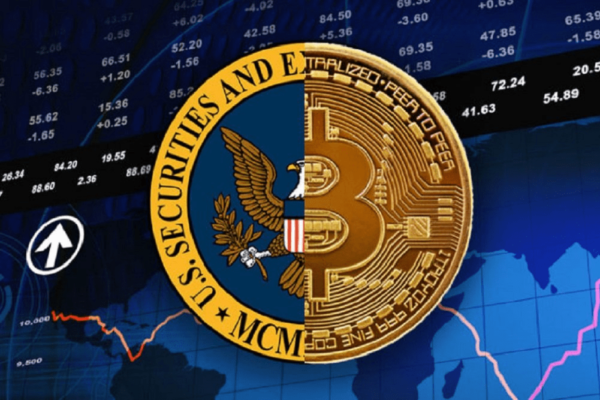
- Crypto regulation in the United States
- Crypto community agitated by the SEC action against Coinbase
- New lawsuits
We continue to observe the activity of the U.S. Securities and Exchange Commission (SEC): securities have become an opportunity for the Commission to sue crypto companies, since the industry continues to be unregulated. Considering the recent regulatory activity, politicians seem to have finally realized that it is all for real. During the Citi Digital Money Symposium that was held recently in London, the participants discussed issues related to cryptocurrency laws in the UK, Europe, and the US. Nicole Sandler, Head of Digital Policy at Barclays, commented that such a late response from politicians — which puzzled the representatives of financial institutions — was not accidental.
“I think one thing certain policymakers have said is that they left this market to do what it wanted to do because they thought it would essentially die. And it hasn’t died, it’s grown,” she commented.
In 2016, Nicole Sandler discussed a regulatory framework for crypto with the European Commission. According to her, the crypto space was nascent then, but it is not anymore. The reason why policymakers did not implement crypto regulation earlier is that they did not believe crypto was here to stay.
“It wasn’t that it was nascent and they couldn’t regulate it, it was a choice to see where the market went. And now they know that they have to regulate it. But the problem is regulation takes a long time from start to finish,” Nicole Sandler added.
Crypto regulation in the United States
The regulators have clamped down on crypto firms, especially in the US. When crypto exchange FTX filed for bankruptcy in November 2022, the SEC started acting quickly and decisively. After the FTX founder Sam Bankman-Fried was arrested in relation to defrauding equity investors, his head of engineering Nishad Singh faced the same charges.
Nicole Sandler believes that the FTX meltdown “had nothing to do with the technology,” but was instead caused by greed and inept asset management.
According to her, even though crypto laws and regulation could have prevented the FTX bankruptcy, it was the company’s own fault, emphasizing that its terms and conditions “didn’t say you can take your client funds and use it for something other than what they’ve said.”
The SEC has also been going after other companies, coming up with different reasons. On March 22, the Commission published a notice, warning Coinbase about its intention to pursue enforcement action against the exchange. The reason is not unusual: the SEC believes that Coinbase’s staking products can be considered unregistered securities.
Crypto community agitated by the SEC action against Coinbase
Coinbase management is disappointed that, after years of allowing US citizens invest in crypto, the SEC has suddenly decided to ban it. The community is turning against Gary Gensler, the SEC chairman.
“People don’t like Gary Gensler, who’s the chair of the SEC, in the crypto space. But if people think back to about ten years ago, in the aftermath of the financial crisis, when the same man was the chair of the CFTC, the vast majority of the derivatives sector — the global derivatives sector — hated him. So it’s not that he’s picking on crypto, this is just his M.O,” said Ijeoma Okoli, a panel participant.
New lawsuits
On March 31, the Moskowitz Law Firm and Boies Schiller Flexner filed a class action lawsuit against Binance, its founder Changpeng Zhao — the world’s leading spokesman for the crypto industry — and Miami Heat’s basketball player Jimmy Butler.
The new lawsuit is based on the typical claim that Binance was trading crypto that is in fact unregistered securities, and that its influencers promoted these instruments illegally. “This is a classic example of a centralized exchange, which is promoting the sale of an unregistered security,” states the complaint. The lawsuit seeks damages in the amount of over 1 billion US dollars from the Binance companies and the influencers. “We’ve been investigating these same unregistered security issues against Binance for over a year,” Moskowitz commented.
The suit claims that according to relevant state securities laws, customers who purchase unregistered securities are entitled to damages equal to all losses they suffered. The defendants do not have to prove that they were deceived or even persuaded by posts or ads on social media, only that they saw them. “The statute clearly states that if an influencer is promoting an unregistered security, and has a financial interest in doing so, the influencer may be liable to everyone who bought the assets. The exchange that facilitates the trades would be liable as well,” Moskowitz explained.
It is far from certain that the court in Florida will consider BNB and other coins to be unregistered securities. Moskowitz is encouraged that the SEC made that determination in lawsuits against FTT and a recent lawsuit against Tron over its currency TRX.
Gary Gensler have provided lawyers with a trail which they have been willing to pursue in order to focus their attack on the weaknesses of the crypto industry.
