
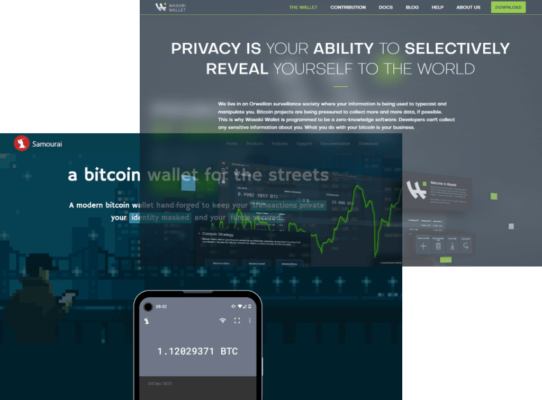
Bitcoin privacy remains subject to a heated debate between Wasabi Wallet and Samourai Wallet, two privacy-focused wallets. The “privacy war” between them has been going on for several years. It is common knowledge that Bitcoin on its own is not private: all transactions are public and recorded on the blockchain. This is why privacy proponents dedicate their time to learning and using tools and wallets that help to protect their privacy.
The war of wallets
Currently, there are two main wallets that protect the privacy of transactions. These are zkSNACKs’ Wasabi Wallet and Samourai Wallet. For several years, their teams have debated whose approach is the best one to ensure Bitcoin privacy.
The debate heated up once again last week after crypto wallet firm Trezor announced it had joined forces with Wasabi Wallet to roll out a new Bitcoin privacy-preserving feature on its devices. Samourai Wallet fans criticized zkSNACKs’ decision to blacklist transactions, fueling the discussion.
Wasabi Wallet censorship
Both Wasabi Wallet and its main competitor rely on CoinJoins — a privacy-enhancing technique that allows multiple users to pool their inputs into one big transaction. By mixing the inputs this technique makes it difficult to track the transactions to their sources and find out which coins belonged to which user. This can be done in a number of ways, with various degree of privacy.
The feud between the developers of the wallets has presented itself in a variety of forms over the years. Currently, the proponents of Samourai Wallet continue to criticize Wasabi Wallet for announcing last year that its coordinator would start blacklisting certain transactions and refuse them from registering in CoinJoins. The firm justified its decision by “legal and regulatory” reasons although it did not share the details of the matter.
Although admitting that blacklisting was an “undesirable” decision, Wasabi claimed that it would be the best way to continue operations and help many of its users protect their privacy. “[Blacklisting] is a small price to pay for the future of Bitcoin’s privacy,” the Wasabi Wallet’s team wrote back then.
However, the advocates of Samourai Wallet argued that Wasabi had betrayed Bitcoin’s ideals of being committed to resisting censorship. “Once they crossed that red line the debate ended for me. Our very existence derives from our desire to systematically dismantle every heuristic that chain surveillance firms rely on. To consort with your sworn adversary is unthinkable,” said SW, a pseudonymous co-creator of Samourai Wallet.
He emphasized that regulatory authorities had not asked zkSNACKs to resort to blacklisting, but the competitors did it anyway. “By normalizing the incursion of chain surveillance into the realm of non-custodial bitcoin wallet software we are allowing an unthinkable ceding of territory without any justification whatsoever. No regulatory requirement, no legislative demand, nothing,” he commented.
L0la L33tz, a privacy and security researcher, admitted that although blacklisting does not hinder the privacy of Wasabi Wallet clients, it could be a slippery slope. “Is a future in which we can only enact our right to privacy at the whim of third parties desirable?” she wrote.
Samourai’s privacy concerns
At the same time, Samourai Wallet’s opponents claim that its default settings do not offer sufficient privacy protection. L0la L33tz has referred to Samourai Wallet’s design decisions as “questionable”. One of the reasons is that the use of the privacy-preserving technique Tor is not enabled by default. To hide their IP address, customers need to activate the option manually. If they forget to do it or are unaware of it, their IP addresses could become exposed.
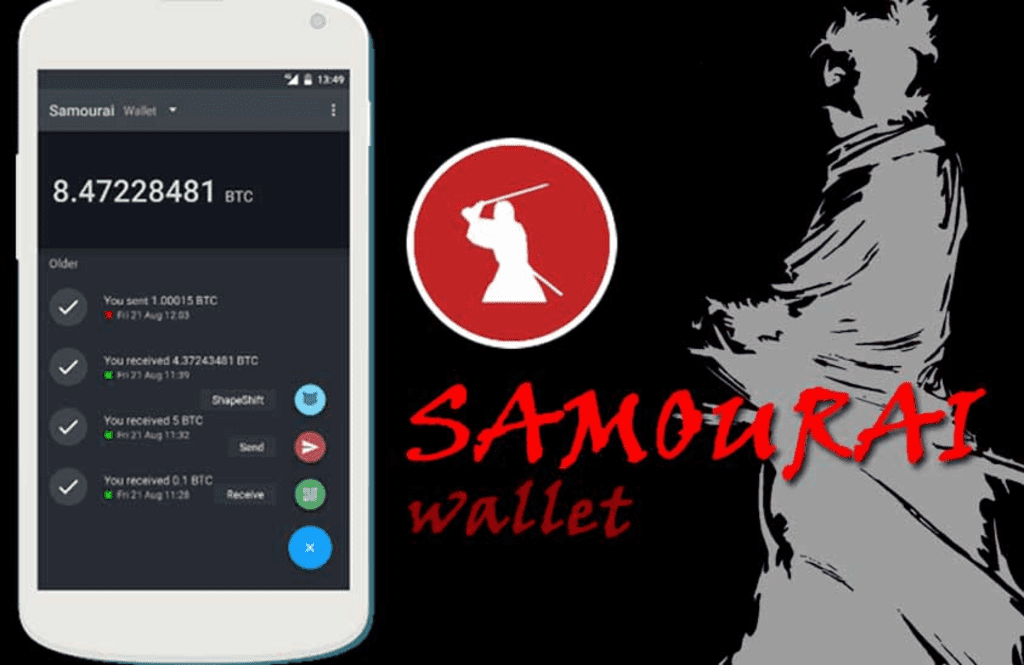
Another decision that is criticized by Samourai’s opponents is that customers need to run their own Bitcoin node to protect their privacy. Many users do not do this and therefore share their “xpub” with Samourai Wallet, exposing information about themselves and their coins.
Wasabi Wallet, on the other hand, does not allow tracking such information. “zkSNACKs, the coordinator behind Wasabi Wallet, does not learn anything about its users via default Tor and blockfilters,” L0la L33tz commented. Samourai Wallet’s team objected that they had never shared this data.
Wasabi proponents claim that Samourai Wallet’s users are supposed to believe that the wallet would not share their data, which contradicts Bitcoin’s philosophy of “don’t trust, verify”.
Verifying information on your own, rather than trusting others, takes a lot of time and effort. According to L0la L33tz, the war of wallets “actually keeps people from learning about Bitcoin privacy and Bitcoin privacy tools. There’s lots of noise and little signal which rather leads to confusion than education.”
Privacy based on confusion
Each Bitcoin privacy technique is aimed to confuse the algorithms that try to track down transactions. The two famous wallets achieve this goal but not without certain limitations. CoinJoins combine the transactions of users into a single transaction. The more people there are in the group, the more anonymous the transactions are. If, on the other hand, there are few participants, then your privacy is at risk.
Our mixer is based on a different principle. We engage our own investors from exchanges and guarantee that all coins are verified and untainted. Each coin provided to our clients has been thoroughly checked by a scoring system. You do not need to wait until there are enough users for a safe transaction. You are guaranteed to receive clean Bitcoins at any time.
