
- Pilot transactions have already been conducted
- Technical implementation
- Why are large banks unwilling to deal with crypto?
Crypto is a perfect solution for Russia’s cross-border transactions. Rosbank will be offering crypto payments to both corporate and private customers. The solution involves collaboration with a fintech intermediary which buys crypto out of Russia and transfers it to a foreign supplier using the importer’s funds.
Pilot transactions have already been conducted
Rosbank is not one of Russia’s largest banks, but it is rightly considered “systemically important”. Its management, in particular, the owner Vladimir Potanin, believes that tokenized assets and digital currencies can contribute to the Russia’s progress in the digital economy. Being one of the first banks to occupy this niche, Rosbank has every chance of becoming one of the top three financial institutions in the country at some point in the future.
Technical implementation
The payments are supported by the Russian fintech platform B-crypto which has specialized in cross-border payments in digital currencies for several years.
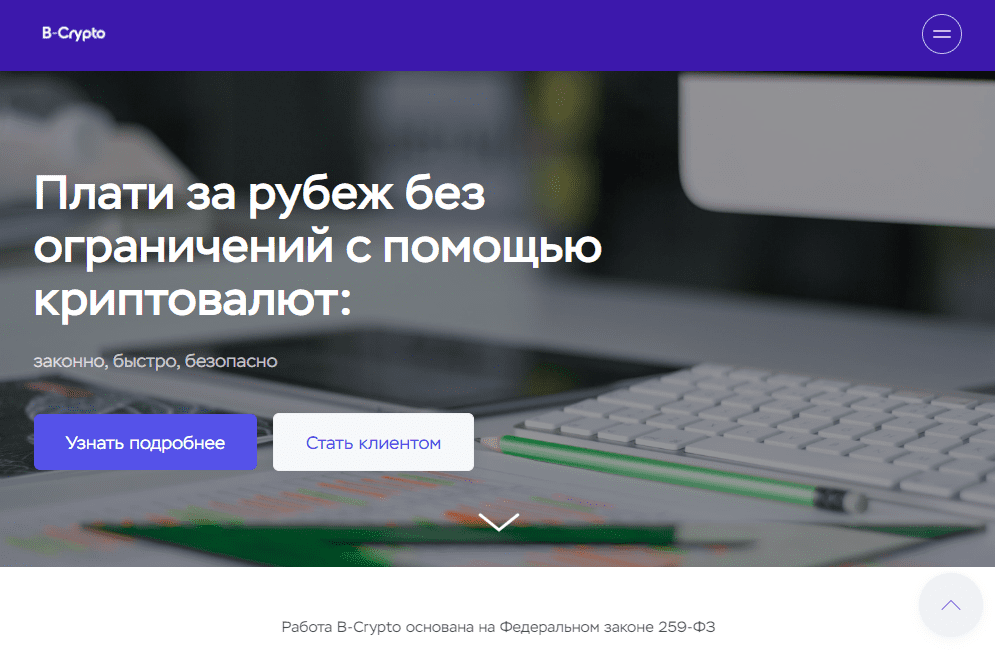
All companies that use B-crypto services undergo a mandatory KYC (Know Your Client) procedure. If the transactions are conducted through Rosbank, the bank also verifies the client’s identity and financial profile. Therefore, Rosbank provides protection from money laundering and other illegal activities.
The transaction procedure is simple:
- The Russian importer reflects in its contract with the foreign supplier that it chooses to pay in crypto and indicates the recipient’s wallet address.
- The supplier issues an invoice to the Russian company, providing the amount to be paid in crypto and the address of the crypto wallet.
- After another contract is signed between the importer and B-crypto, the customer deposits the fiat money funds to the Rosbank account.
- The customer files an application to purchase crypto, and the bank transfers the money to B-crypto.
- 5. B-crypto buys crypto out of Russia and transfers it to the supplier.
Why are large banks unwilling to deal with crypto?
The Russian media holding rbc.ru sent a request to the top 50 Russian banks, and none of them confirmed the fact of providing such services. According to Alexey Voylukov, Vice President of the Association of Banks of Russia, cross-border crypto transactions are the business of smaller banks. He explained that the larger institutions are not interested in it due to the lack of cryptocurrency liquidity necessary to cater to their larger customers.
Lawyers are also concerned that such transactions may be perceived as a potential workaround to bypass sanctions and therefore have legal consequences for the parties to transactions. In the current political situation, many countries have included crypto transactions in their sanctions regimes.
