
- ETF was launched on June 27
- Crypto firm tokens are increasing
- DeFi assets show signs of recovery
- LSTfi promotes the growth of DeFi
The crypto market is becoming optimistic, hoping for the crypto winter to end, after the appearance of new promising products, and the approval of the first leveraged Bitcoin futures exchange-traded fund (ETF). DeFi tokens have demonstrated an increase in popularity, with users returning to decentralized finance which is also indicated by the growing number of wallets.
ETF was launched on June 27
The Securities and Exchange Commission has approved Volatility Shares 2X Bitcoin Strategy ETF (BITX). It was scheduled to go live on the Chicago Board Options BZX Exchange on June 27.
The BITX ETF hopes to achieve returns that are twice as high as the CME Bitcoin Futures Daily Roll Index. Investors will be able to buy ETF shares, combining securities like equities and commodities, and get exposure to such assets without owning them.
Bitcoin ETFs can be divided into two basic categories: Bitcoin futures and Bitcoin spot. The new fund will be a leveraged ETF, increasing the returns of a benchmark index with the help of leverage represented by Bitcoin futures.
Crypto firm tokens are increasing
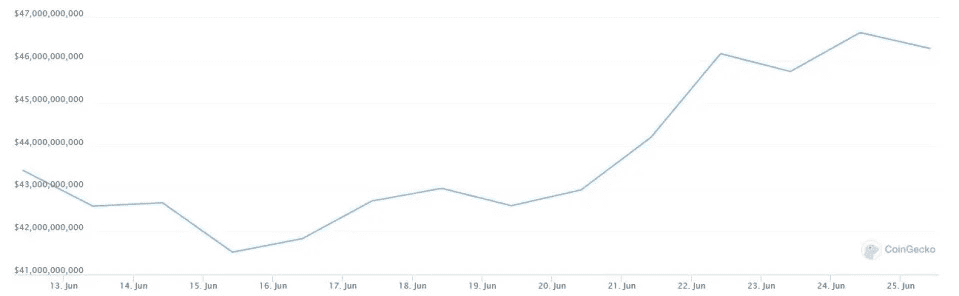
Last weekend, the native tokens of Uniswap, Aave, Compound and Synthetix recorded double-digit growth. Although DeFi assets crashed on June 24, CoinGecko says that each of the ten leading crypto assets by market cap traded within a 2% range. AAVE and COMP increased by impressive 30%, SNX grew by 19%, and UNI rose by 12%. CRV, DYDX, and CAKE also grew by 7%.
Over ten days, the combined total value locked (TVL) and the market cap of DeFi assets increased by over 10%.
DeFi assets show signs of recovery
DeFi tokens have mostly performed below expectations this year, while bizarre memecoins and Bitcoin became even more popular among investors. In April, memecoins experienced a revival and erupted onto the Bitcoin blockchain, with the BRC-20 token standard becoming significantly more popular. As a result, Bitcoin grew by 20% in just 10 days and its dominance in the market reached over 50%, achieving its highest levels in two years.
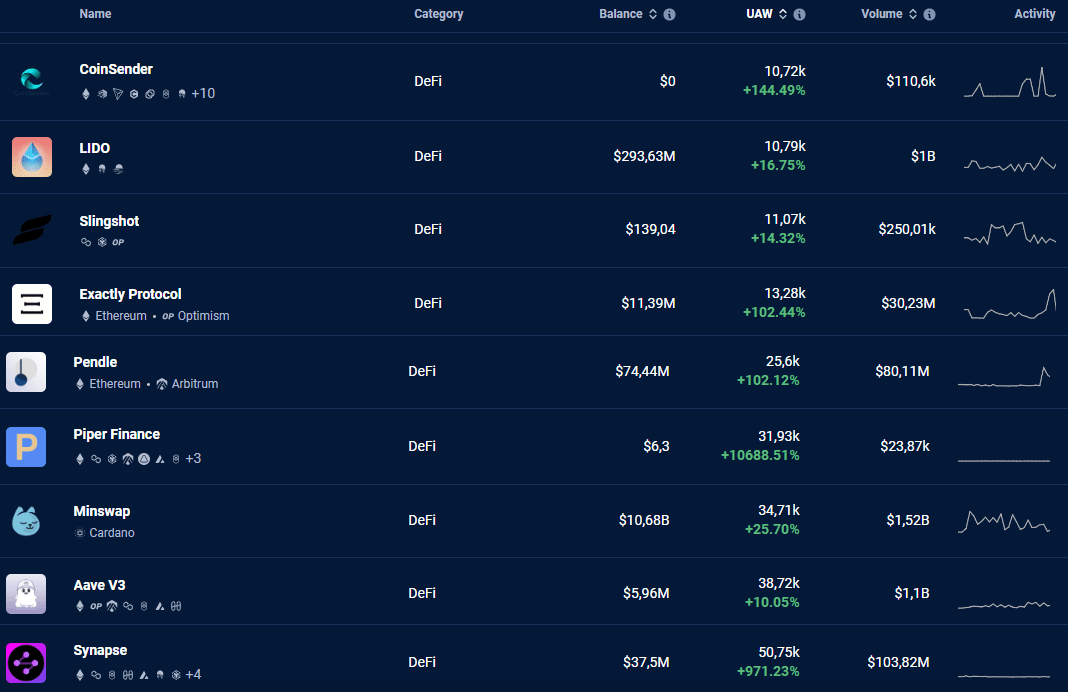
However, currently, many investors are turning to DeFi, as indicated in DappRadar’s report published on June 22. Many DeFi dApps have recorded a significantly increased activity. According to DappRadar, the number of unique wallets engaging with several DeFi projects has reached all-time-high levels in June.
LSTfi promotes the growth of DeFi
Moreover, DeFi has gained an advantage as a result of increased dApp integrations which support liquid staking tokens (the LSTfi sector). LSTs, such as stETH by Lido and rETH by Rocket Pool, allow investors to be remunerated for staking without running a node or locking up their assets.
DeFi integrations represent a new source of returns to investors with liquid staking tokens. This is why they are becoming more and more popular among the investors wishing to maximize the capital efficiency when staking. According to Dune Analytics, almost ten million ETH is locked in Ethereum-based LST tokens.

