
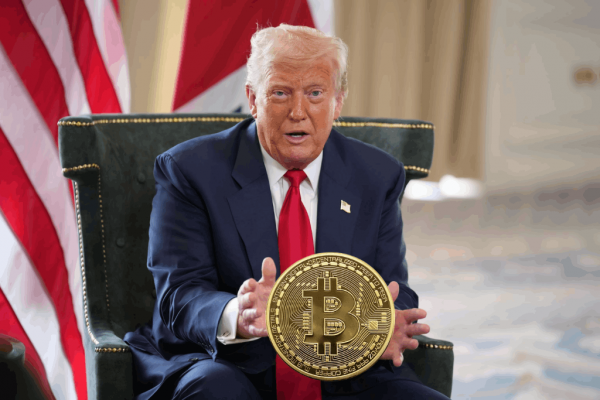
The recently released 2025 National Security Strategy (NSS) from the Trump administration makes no mention of digital assets or blockchain technology. The 33-page document focuses primarily on artificial intelligence, biotechnology, and quantum computing. Published on Friday, the NSS is a key policy document drafted by the White House, outlining the president’s view of global threats and opportunities.
While positioning itself as a pro-crypto administration, the White House has already taken several notable steps in support of the industry. These include establishing a presidential working group on digital asset markets, signing the GENIUS Act to regulate stablecoins, and rolling back several enforcement actions against crypto companies. Still, the absence of any reference to Bitcoin in the context of global economic strategy reinforces the conclusion that digital assets remain outside the scope of national security planning.
“We want American technologies and standards—especially in artificial intelligence, biotechnology, and quantum computing—to lead the world forward,” the strategy document states.
Actions Taken and Their Implications
The administration’s pro-crypto posture has resulted in several tangible policy moves: the creation of a presidential working group on digital asset markets, the signing of the GENIUS Act governing stablecoin regulation, and the reversal of multiple enforcement actions targeting crypto firms.
However, the lack of any explicit reference to Bitcoin in discussions of global economic policy suggests that digital assets still are not being considered in national security planning. The NSS materials repeat the statement: “We want American technologies and standards—especially in artificial intelligence, biotechnology, and quantum computing—to drive the world forward.”
Trump and Crypto: Promises vs. Reality
Trump’s crypto-related promises—viewed through the lens of his political rhetoric and subsequent actions—form a contradictory mix of statements and policy moves. During his campaign, he branded himself a potential “crypto president” and stressed the need to strengthen U.S. crypto infrastructure, a message widely interpreted as a pledge to create a favorable environment for digital assets within America’s national strategy. Throughout the campaign, he argued that the future of cryptocurrencies and Bitcoin would be shaped in the United States rather than abroad—framing this as an assertion of U.S. leadership in global crypto innovation and a signal of potential regulatory shifts toward industry support.
The president repeatedly reinforced the idea that digital assets are part of the national agenda. A prominent example was his appearance at the Bitcoin conference in Nashville in 2024, where Trump emphasized that the future of crypto and Bitcoin “will be determined in the United States, not overseas.” He also portrayed global competitors as beneficiaries should the U.S. fail to adopt crypto-friendly policies.
In practice, several policy actions can indeed be viewed as attempts to fulfill parts of these promises. The creation of the presidential working group on digital asset markets reflects an intent to institutionalize and structure the crypto sector within federal governance. The signing of the GENIUS Act, aimed at regulating stablecoins, indicates attention to critical elements of crypto infrastructure and an effort to create a legal foundation for their operation.
At the same time, the administration has moved to curtail certain enforcement actions against crypto companies, which aligns with a broader push to ease regulatory frictions and establish a more predictable environment for the industry.
However, the omission of digital assets and blockchain technology from the 2025 National Security Strategy demonstrates that, despite the declared political support for crypto, the government opted not to elevate crypto-related issues as a distinct strategic priority in its core security doctrine. This reflects a cautious balance between rhetorical commitments and the boundaries imposed by national security considerations.
Ultimately, while Trump has issued formal statements of support and taken concrete steps to build institutional and regulatory frameworks, the lack of explicit integration of crypto into the nation’s primary strategic document highlights the challenges of translating political promises into fully realized executive policy.
