
On December 18, CEO Paolo Ardoino presented data from Chainalysis and Artemis showing that in 2025, payments totaling USD 156 billion were processed using Tether’s USDT stablecoin, with each individual transaction valued at USD 1,000 or less.
These figures highlight a critical aspect of cryptocurrency adoption that is often overlooked when focusing on price charts or ETF fund flows: mass, everyday usage.
Rapid Growth in Small-Value Transfers
Small-value transfers are becoming an increasingly important component of USD-denominated transactions. Since 2020, their volume has grown steadily, accelerating in 2024 and continuing into 2025, when the average daily value of transactions below USD 1,000 exceeded USD 500 million.
As a result, USDT is increasingly functioning as a digital payment system rather than merely a trading instrument.
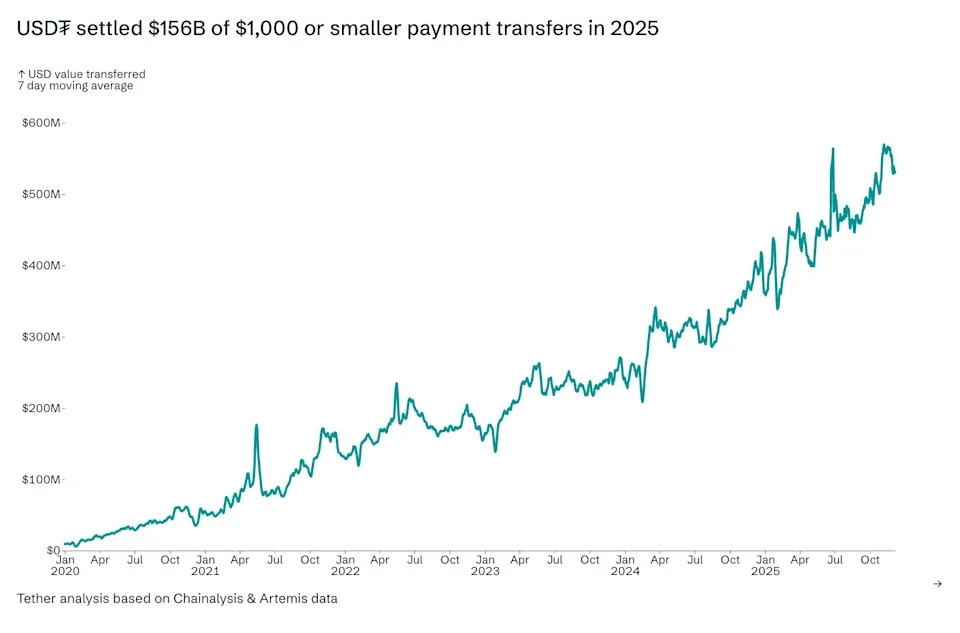
The Tether CEO shared statistics on USDT payments. Source: X / Paolo Ardoino
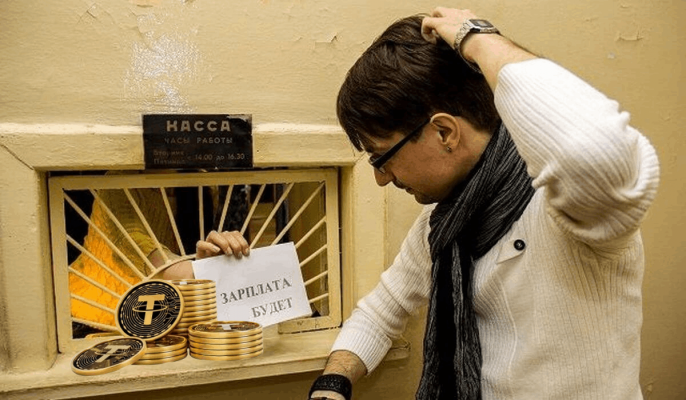
It is important to understand who uses stablecoins and how they are used. Payments under USD 1,000 are most commonly associated with remittances, salary payments, retail purchases, the movement of savings, and P2P transfers—especially in emerging markets.
Типы транзакций, преобладающие в структуре активности USDT
1. Money Transfers
These include international remittances conducted by individuals, businesses, and organizations.
2. Salary Payments
Regular payments to employees, both domestically and across borders.
3. Retail Purchases
Payments for goods and services in online stores and marketplaces, primarily involving small amounts.
4. Peer-to-Peer (P2P) Transfers
Direct personal transfers between users without intermediaries.
5. Movement of Savings
Users relocate small savings digitally due to low fees and ease of use. Unlike large financial transactions, these transfers are recurring in nature and are rarely driven by speculation.
An Ideal Alternative to the Traditional Banking System
In practice, USDT is gradually replacing traditional cash payments and bank transfers in regions where sending or receiving U.S. dollars is difficult or costly.
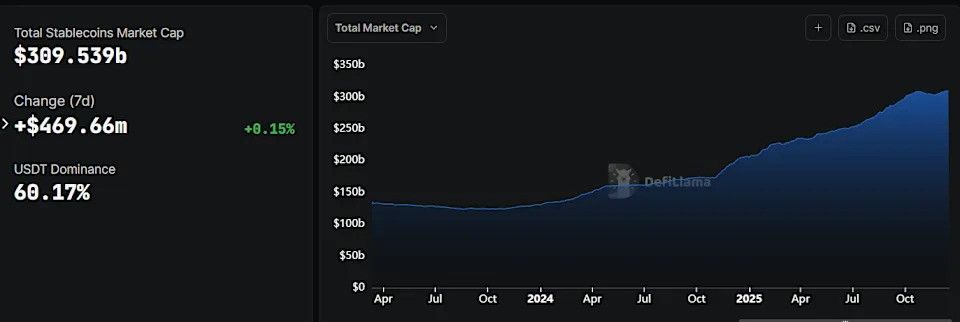
This trend aligns with USDT’s broader development trajectory in 2025. During this period, the circulating supply of USDT reached new all-time highs, reflecting strong demand for dollar-denominated assets outside the crypto trading sector.
At the same time, ecosystem growth has coincided with regulatory changes. In the United States, the GENIUS Act formally established the legal status of payment stablecoins, boosting institutional confidence in dollar-backed digital assets.
In the European Union, the MiCA framework introduced stricter licensing requirements for platforms using stablecoins. While this prompted some regulated exchanges to discontinue USDT support, the stablecoin’s global popularity remained largely unaffected.
In addition, Tether continues to invest heavily in new technologies. A recent investment in solutions based on the Lightning Network protocol underscores the company’s commitment to making USDT payments faster and cheaper.
Partnerships across Africa and the Middle East further demonstrate that Tether’s strategy extends beyond maintaining trading liquidity to actively developing financial services infrastructure.
The cumulative figure of USD 156 billion significantly reshapes perceptions of cryptocurrency adoption at scale. Despite persistent attention on market volatility, stablecoins continue to steadily strengthen their role in the global financial system.
