
- Core Principals of the Cyber Strategy
- Shaping Adversary Behavior
- Streamlining Regulation
- Modern And Secure Federal Networks
- Protecting Critical Infrastructure
- Ensuring Leadership in Critical And Emerging Technologies
- Developing Cyber Talent and Expertise
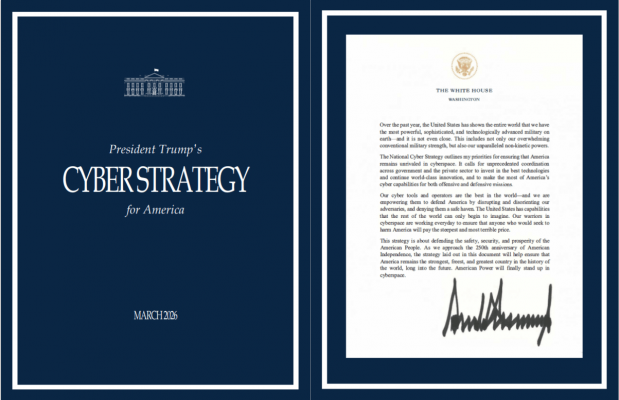
On March 6, the White House released a document titled “America’s Cyber Strategy.” It is highly ambitious and clearly illustrates how the United States views both itself and the world around it.
Cyberspace was born in the United States. American talent, innovation, scientific research, and the vast capabilities of the federal government combined to create a dynamic and thriving digital ecosystem—one that every American relies on for information, economic opportunity, and the foundation of modern life.
However, freedom and security in cyberspace cannot be taken for granted. Adversaries and cybercriminals exploit digital networks to advance authoritarian agendas, suppress democratic institutions, and undermine U.S. national and economic security.
Core Principals of the Cyber Strategy
The United States possesses unmatched technological and economic innovation, unparalleled military power, and a society committed to free and open expression.
Shaping Adversary Behavior
The President emphasized the need to fully leverage the capabilities of the U.S. government to protect citizens, businesses, and allies from attacks by foreign militaries, intelligence services, and criminal organizations.
The strategy calls for stronger incentives for the private sector to accelerate threat detection and mitigation, as well as expanding national cyber defense capabilities. Particular focus is placed on preventing attacks before they occur, dismantling hostile digital infrastructure, and imposing sanctions on foreign hacking groups.
Streamlining Regulation
The strategy aims to reduce excessive cybersecurity-related regulatory requirements in order to make it easier for companies and institutions to fulfill their data protection responsibilities.
It also proposes liberalizing certain legal frameworks governing privacy and cybersecurity, enabling private companies to respond more quickly and effectively to rapidly evolving cyber threats.
Modern And Secure Federal Networks
Federal agencies are required to upgrade and modernize their IT systems by adopting cybersecurity best practices, post-quantum cryptography, and zero-trust architecture.
Government institutions will also gain access to advanced technologies and specialized professional teams tasked with continuous testing, monitoring, and threat detection. Strengthening the security and resilience of systems supporting national defense, intelligence operations, and civilian governance is identified as a top priority.
Protecting Critical Infrastructure
The United States plans to identify, prioritize, and reinforce the nation’s critical infrastructure, including defense systems, energy networks, banking and telecommunications systems, water treatment facilities, and healthcare institutions.
This effort includes removing equipment and vendors that pose security risks and replacing them with domestically produced alternatives. The strategy also emphasizes the ability to rapidly recover from cyber incidents.
Ensuring Leadership in Critical And Emerging Technologies
The government intends to safeguard America’s innovative edge and intellectual leadership by developing secure technologies and resilient supply chains that protect user privacy from design to deployment.
Key objectives include the adoption of post-quantum cryptography, the development of secure artificial intelligence, and the deployment of AI-powered tools capable of identifying and blocking cyber threats.
Developing Cyber Talent and Expertise
The cybersecurity workforce is recognized as a strategic national asset requiring significant investment and development.
The government plans to expand the talent pipeline by supporting education, retraining existing specialists, and attracting young professionals to the cybersecurity field. Universities, colleges, corporations, and venture capital are expected to play a key role in this process.
