
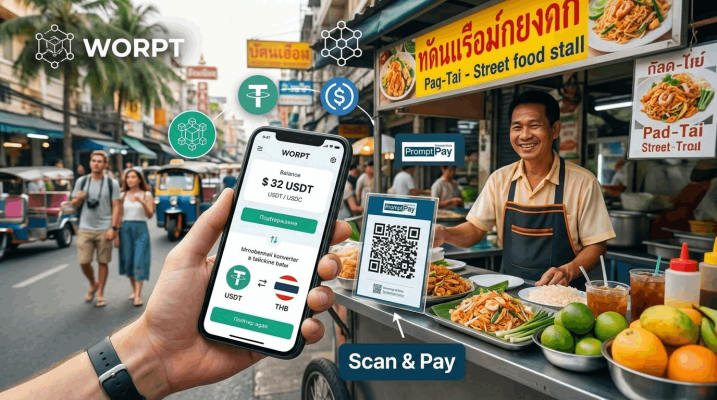
- How the Conversion Magic Works: From Wallet to Checkout
- Transaction Architecture
- The Ecosystem of Giants: Visa, Tether, and The Mall Group
- Unified Balance and Visa Cards
- The Philosophy of Mass Adoption: From Speculation to Everyday Spending
- Security and Compliance
- What’s Next for the Industry?
Southeast Asia continues to strengthen its position as the world’s leading testing ground for bringing cryptocurrencies into the real economy. Following El Salvador’s example and the growing role of digital assets in Dubai, Thailand has taken a major step that could reshape the payment experience for millions of international travelers. The country has launched WORPT, a platform that allows foreign tourists to pay for everyday purchases using their USDT and USDC stablecoin holdings.
The project operates within the Digipay for Tourists regulatory sandbox, overseen by Thailand’s Securities and Exchange Commission (SEC). This means the government is doing more than simply permitting an experiment—it is actively supporting the integration of blockchain technology into the country’s existing financial infrastructure.
How the Conversion Magic Works: From Wallet to Checkout
The biggest obstacle to widespread cryptocurrency adoption in retail has always been speed. Merchants don’t want to wait 10 minutes for blockchain confirmations, and travelers don’t want to pay excessive gas fees. WORPT solves both problems by making the entire payment process seamless and transparent for everyone involved.
Transaction Architecture
The platform combines two powerful ecosystems: the global stablecoin economy and Thailand’s nationwide PromptPay payment network.
1. Deposit: Travelers fund their WORPT account by transferring USDT or USDC.
2. Instant Conversion: The platform, developed by Waan Exchange and Wipay, automatically converts the digital assets into Thai baht (THB) at the current exchange rate.
3. QR Code Payment: The customer scans a standard PromptPay QR code, available virtually everywhere—from street vendors selling pad thai to luxury retail boutiques.
The key point is that, within the regulatory sandbox, local merchants do not accept cryptocurrency directly. From the merchant’s perspective, every transaction is simply an instant fiat payment. WORPT handles all exchange-rate risk, compliance requirements, and asset conversion behind the scenes. This enables businesses to participate without violating Thailand’s strict banking regulations or training staff to work with blockchain wallets and addresses.
The Ecosystem of Giants: Visa, Tether, and The Mall Group
WORPT is far more than a local startup. The platform is backed by major players from the financial and retail sectors, including:
• Tether, the issuer of USDT, providing stablecoin liquidity.
• Visa, the global payments network preparing the infrastructure for the platform’s next stage of development.
• The Mall Group, one of Thailand’s largest shopping mall operators, giving the platform access to millions of shoppers.
Unified Balance and Visa Cards
WORPT is expanding beyond QR-code payments by preparing to launch both physical and virtual Visa prepaid cards.
This creates a seamless financial experience for travelers. According to co-founder Pawin Jittivongsamarn, the goal is to unify every step of the payment journey:
That’s why we focused on integrating the entire process… to provide travelers with greater convenience and more payment options throughout their journey.”
Once users fund their account, they no longer need to make separate transfers. Instead, they receive a single Thai baht balance that can be used both for QR-code payments at a local café and for purchases made through Visa terminals, such as buying airline tickets at the airport.
The Philosophy of Mass Adoption: From Speculation to Everyday Spending
For the cryptocurrency industry, this launch represents an important psychological shift. For years, Bitcoin and other digital assets were viewed primarily as trading instruments or “digital gold” for long-term savings. Attempts to use them for everyday shopping often felt cumbersome and required merchants to understand blockchain technology.
Janeboon Runnapaya, co-founder of WORPT, emphasized this change in perspective:
“Historically, cryptocurrencies have primarily been viewed as assets for storage and trading. What makes this development particularly significant is their transition toward practical everyday use.”
Thailand’s large tourism industry makes it an ideal market for this model. Traditionally, international travelers lose money through double currency conversion—first exchanging their home currency into U.S. dollars, and then converting dollars into Thai baht. By using USDT, travelers from Europe or the United States can preserve the value of their funds in a digital dollar and convert them into baht only at the moment of purchase, avoiding unnecessary banking and exchange fees.
Security and Compliance
Operating within the SEC’s regulatory sandbox ensures the platform cannot become a backdoor for money laundering or illicit financial activity. WORPT must comply with strict regulatory requirements, including:
• KYC (Know Your Customer): Mandatory identity verification for all foreign users.
• AML (Anti-Money Laundering): Real-time transaction monitoring and compliance controls.
This framework effectively legitimizes stablecoin payments within Thailand’s tourism sector. Regulators benefit from greater transparency over foreign capital inflows, while tourists gain access to a more efficient and affordable way to exchange currency. For users, the system provides confidence that they are using an officially recognized platform operating under government oversight.
What’s Next for the Industry?
If WORPT succeeds in Thailand, it could become a blueprint for the rest of Southeast Asia. Countries such as Indonesia, Vietnam, and the Philippines share many of the same characteristics, including tourism-driven economies and widespread adoption of QR-based payment systems.
In November 2026, WORPT, together with Tether, The Mall Group, and Thai regulators, plans to host a major event and panel discussion focused on the project’s future expansion. If the pilot proves successful, the platform could begin supporting additional digital assets beyond stablecoins while expanding beyond the tourist hubs of Bangkok and Phuket.
Thailand is demonstrating a pragmatic and mature approach to cryptocurrency adoption. Rather than attempting to replace the national currency, the country is using blockchain technology to make life easier for tourists. The days of searching for a currency exchange booth with unfavorable rates just to buy a coconut on the beach are gradually coming to an end. Soon, all travelers may need is a few dollars’ worth of USDT on their smartphone and an app capable of scanning a QR code.
