
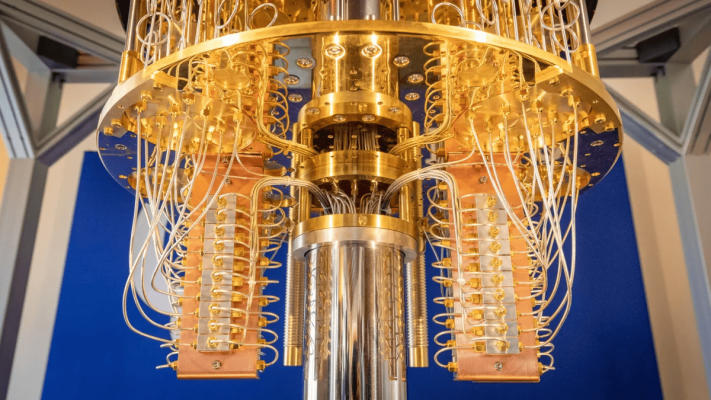
- The capabilities of a quantum computer
- The first step to successfully cracking blockchain has been taken
Chinese researchers said they have successfully cracked encryption algorithms used in banking and cryptocurrency using a quantum computer.
Researchers at Shanghai University led by Wang Chao said they used a quantum computer from Canadian company D-Wave Systems to crack algorithms through quantum annealing, which involves searching for the lowest energy state, the South China Morning Post (SCMP) reported on October 11.
The researchers targeted the Present, Gift-64 and Rectangle algorithms, the foundation of the substitution-preference network (SPN) structure that supports advanced encryption standards (AES), which are widely used to encrypt cryptocurrency wallets.
AES-256, in particular, is considered one of the most secure encryption standards available, but researchers say quantum computers could soon become a threat, and a breakthrough could pose a serious threat to long-standing password protection mechanisms.
The capabilities of a quantum computer
Quantum machines are not built on transistors like the computers we’re used to, but on the laws of quantum mechanics: entanglement and the superposition principle. They can search in parallel for all solutions at once – unlike conventional computers, which search sequentially and rather slowly. Wang’s paper compares the quantum annealing method they used to an artificial intelligence algorithm that can optimize solutions on a global scale.
Traditional algorithms explore all possible paths, but quantum tunneling assumes that particles travel through barriers rather than over them, allowing the quantum computer to more efficiently find the lowest point, bypassing obstacles that are usually difficult to overcome with standard methods.
“For the first time, a true quantum computer poses a real and significant threat to several full-scale SPN algorithms in use today,” Wang’s team said.
Quantum computing has been a long-anticipated game changer for the crypto industry. Computers capable of cracking encryption can provide thieves with access to users’ funds in large volumes and at high speeds.

The first step to successfully cracking blockchain has been taken
Despite the progress, the researchers said that limitations will still prevent full-fledged quantum hacking, at least for the time being, due to environmental factors, hardware limitations, and the difficulty of developing a single attack algorithm capable of hacking multiple systems.
The researchers stated that the quantum computer attack did not reveal the specific access codes used in the algorithms being tested; however, they were more successful than previously achieved. They noted that further developments could lead to more robust quantum attacks in the future and reveal potential new vulnerabilities in existing cryptographic systems.
The findings were documented in a peer-reviewed paper published Sept. 30 in the Chinese Computer Federation’s (CCF) academic journal Chinese Journal of Computers.
Ethereum co-founder Vitalik Buterin has already suggested a way to mitigate the risk associated with quantum computing that a quantum computer could produce in the future, explaining in a March 1 post that a simple hard fork modification could solve the problem. Buterin says the blockchain will undergo a hard fork and users will have to download new wallet software, but few will lose their funds. He also believes that the infrastructure needed to implement a hard fork in the Ethereum blockchain could in theory “start being built tomorrow.”
