
- Circle is moving to New York
- Will MiCA 2.0 fill the EU regulatory gaps?
- Competition is growing in the stablecoin market
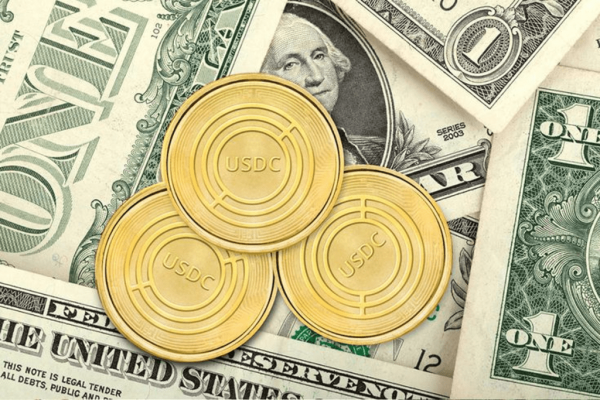
Circle, the issuer of the world’s second largest stablecoin, USDC, feels “confident” that stablecoins will become mainstream money. That said, rules need to be established worldwide to ensure compliance for all issuers of payment stablecoins.

“Circle is confident that there will be mainstream adoption of stablecoins as the money for the internet age,” Dante Disparte, chief strategy officer and head of global policy at Circle, noted.
“We expect there will be internet payments firms and other financial services companies that (will) attempt to enter or to expand in this space, which is a strong signal that stablecoins are here to stay,” Disparte pointed out.
However, Disparte believes it is equally important that regulation of stablecoins be established globally. He said that the basic principles of conservative provisioning and financial crime compliance should apply equally to any company seeking to issue a payment stablecoin.
Circle is moving to New York
Disparte’s comments came as the stablecoin issuer prepares to move its global headquarters to New York City by early 2025 after filing for an initial public offering (IPO) in January.
Disparte noted that the US system authorizes state banking and remittance supervisors to develop and regulate the payments industry at the state level.
A key question now is whether the US will finally enact federal stablecoin rules or maintain the status quo of uncertainty, which policymakers in both US political parties say is unacceptable,” Disparte said. He explained: “The absence of a US regulatory framework for dollar-referenced stablecoins represents a threat to American interests. This vacuum could incentivize the creation of products that exploit trust in the dollar while bypassing US regulations, potentially becoming a refuge for illicit actors.”
He said the July 2023 stable currency bill advanced by the House Financial Services Committee has generated significant political momentum and support.
“Congress should approve such a bill on a bipartisan basis, and the President should sign it if it comes to his desk. The legislation would create a floor for all issuers to comply with US anti-money laundering, countering terrorist financing and sanctions obligations,” Disparte said.
He added that these regulations should apply to US issuers of payment stablecoins as well as their international counterparts, many of whom are licensed to issue dollar-denominated stablecoins from jurisdictions including the EU and UAE.
Will MiCA 2.0 fill the EU regulatory gaps?
The European Union’s Markets in Cryptocurrency Assets Regulation Act (MiCA) partially came into effect in June, and new rules regarding stablecoins went into effect on June 30.
On July 1, Circle said it became the world’s first stablecoin issuer to achieve MiCA regulatory compliance after it received an electronic money institution (EMI) license from the French banking regulator.
“With MiCA, Europe succeeded in doing what other jurisdictions, including the US, have yet to achieve: provide legal and regulatory clarity for not one piece of the digital asset market, but all of it,” Disparte said. However, he pointed out: “Like all novel rules or comprehensive regulations, MiCA is imperfect, and in places overly prescriptive, so much so that EU policymakers are already contemplating MiCA 2.0, which would potentially fill certain gaps in the regime, such as non-fungible tokens, decentralized finance and other areas.”
Competition is growing in the stablecoin market
Competition in the stablecoin market is increasing due to new entrants. For example, PayPal’s stablecoin pegged to the US dollar, PayPal USD, whose market capitalization has already surpassed $1 billion. Ripple Labs has begun testing its stablecoin pegged to the US dollar, Ripple USD (RLUSD) on both the XRP ledger and Ethereum, and plans to expand it to more blockchains.
Tether’s USDT remains the largest stablecoin currency with a market capitalization of more than $118 billion, according to CoinMarketCap. Tether also announced plans to launch a new stablecoin pegged to the UAE dirham (AED).
On Aug. 26, the market capitalization of stablecoins, excluding algorithmic coins, reached a record $168 billion. The market reached $167 billion in March 2022, but fell to $135 billion by the end of that year.
“We invite any competitors to come to America, the EU, Singapore, and beyond, to submit themselves to a vigorous licensing process, to follow the same standards that are the bedrock of our company, and to join us as regulation-first, compliant companies so that this ecosystem can grow and thrive long into the future,” Disparte added.
.
