
Crypto firms are leaving the U.S. amid a continued struggle to supervise the industry: Adrienne Harris, DFS superintendent, faces criticism from the crypto community
- Crypto firms are not ready to provide services to U.S. customers
- Gary Gensler’s new competitor
- An extraordinary person: Adrienne Harris
- Binance failed because of Harris’s radical approach
- The Signature Bank situation has undermined the confidence in Harris
- Why Harris is dangerous to Gensler
On April 4, Paxful co-founder and CEO Ray Youssef announced that the exchange is suspending its marketplace indefinitely due to regulatory pressure and shortage of personnel.
Crypto firms are not ready to provide services to U.S. customers
According to Ray Youssef, customer funds are accounted for, and the exchange will continue to prioritize the safety of customer assets. He encouraged clients to withdraw and self-custody their assets and added that the regulatory pressure is mainly caused by the United States.
Paxful became another crypto exchange forced to cease operations due to legal difficulties in the U.S. Earlier, on March 31, Bittrex also announced that it would wind down its U.S. operations due to regulatory pressure. Beaxy shut down after the Securities and Exchange Commission (SEC) filed charges against it for failing to register as a securities exchange.
Gary Gensler’s new competitor
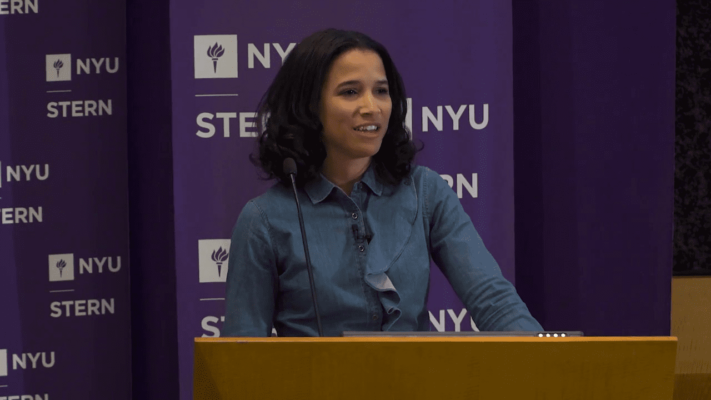
Adrienne Harris, superintendent of the New York Department of Financial Services (DFS), seems to have her own designs on crypto regulation. Unlike the SEC, the Department aims not only to regulate crypto but to promote economic growth. For Harris, who has impressive governmental and corporate experience, the two objectives mean sustaining the nation-leading approach to developing the crypto industry while ensuring that the state does not welcome another Sam Bankman-Fried.
Adrienne Harris and the DFS are distinguished by their innovative approach to crypto regulation, which was established through the BitLicense virtual currency program in 2015. Under the program developed by then-superintendent Benjamin Lawsky, New York became the first state to establish a crypto framework — a groundbreaking move that, along with the willingness to grant trust charters, attracted leading companies. A trust charter — a step higher than a BitLicense — grants fiduciary authority to companies.
By offering crypto firms both BitLicenses and trust charters, the state of New York has allowed them to conduct business from issuing stablecoins to storing such currencies as Bitcoin and Ether for customers.
An extraordinary person: Adrienne Harris
Harris was appointed superintendent in January 2022 and became the first Black woman in command of the department. She was also a professor at the University of Michigan’s School of Public Policy and a senior advisor at the Brunswick Group advisory firm.
Harris has spent most her career in public service. She served in the Treasury Department and the Obama administration, where she managed the financial services portfolio and headed an interagency task force on distributed ledger technology and crypto. Harris sat on the board of directors for 10 companies and non-profit organizations, including the controversial lending platform LendingClub and the real estate brokerage Homie. She was also an advisor to 11 other companies, including fintech representatives such as the payday loan app Brigit.
Binance failed because of Harris’s radical approach
After the FTX meltdown, everyone started watching Binance, an exchange with a reputation for avoiding the rules. Even though Binance did not hold a BitLicense, it secured a footing in New York with the help of a partnership with Paxos, which issued a Binance-branded stablecoin (BUSD). Its market cap reached over 20 billion U.S. dollars. After reports that Binance was mixing customer funds with collateral for tokens — which reminded of the FTX situation — the DFS ordered Paxos to end its partnership with Binance and stop issuing the token.
Many representatives of the crypto community have criticized Harris’s radical approach towards Paxos since the company had earlier earned the department’s approval to issue BUSD. Harris responded, “We were taking responsible decisions with the stability of the market in mind.”
The Signature Bank situation has undermined the confidence in Harris
It is getting more and more difficult for Harris to balance her department’s priorities as she faces resistance and criticism from crypto companies. The situation became particularly difficult after she announced that the DFS had taken possession of Signature Bank in the middle of March. The bank, which worked with entrepreneurs in crypto, real estate, and various small businesses, was destabilized by a deposit run. Many leaders of the crypto community considered DFS’s move to be an attack on the industry, and some of them spoke about their intention to leave New York, even though Harris denied that the measure was caused by the bank’s crypto business.
“Regardless of what DFS’s intentions were, it was taken extremely negatively by the crypto community, and it will negatively impact trust in the DFS long-term,” said Austin Campbell, the former chief risk officer at Paxos and an adjunct professor at Columbia Business School.
Why Harris is dangerous to Gensler
Since 2015, the DFS has established a kind of crypto regulation. Unlike the SEC, Adrienne Harris is interested in developing the industry. Although not all of her measures are well received by the community, so far, she has mostly managed to balance between establishing regulation and developing crypto.
Gensler, on the other hand, is clearly aiming to ban crypto and the related business altogether. From his point of view, this market has the right to exist only if it is completely de-anonymized. Harris seems to have a somewhat softer and more reasonable attitude to these issues. Of course, she is not going to eliminate KYC/AML, but at least there is a place for digital assets in her worldview.

Our Bitcoin mixer publishes a weekly roundup
of interesting news from the world of cryptocurrencies.
Visit our blog: Mixer.money