
- Cryptocurrency in Algeria
- Examples of Countries that Have Banned Cryptocurrency
- Brief Overview of Countries that Have Fully Legalized Cryptocurrency
- Conclusion
Cryptocurrency in Algeria
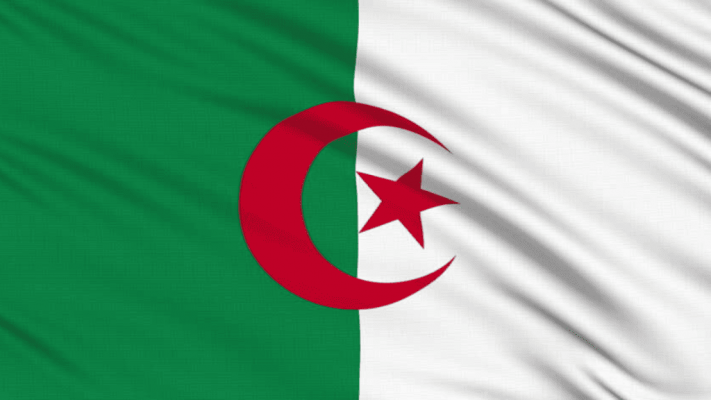
In July 2025, Algeria adopted one of the world’s toughest laws on cryptocurrency. Under amendments passed by parliament on July 24, any activity involving crypto assets is prohibited — including issuing, buying, selling, owning, using them as a means of payment or investment, as well as promoting or advertising any virtual currencies, such as Bitcoin or Ethereum. The ban even extends to storing cryptocurrency in wallets and visiting cryptocurrency exchanges.
Violations are punishable by up to one year in prison and fines of up to 1 million dinars (about $7,700). For offenders involved in organized crime or large-scale fraud, penalties can be even harsher. The law treats cryptocurrencies as financial property, with any operations falling under anti–money laundering (AML) and counter–terrorist financing (CTF) provisions.
Authorities justify the crackdown as necessary to protect national security and financial stability, while also combating fraud, tax evasion, and the black market. Algeria has opted for a total ban rather than regulation, setting itself apart from European countries, the U.S., and several Asian nations where regulated crypto markets are developing. This policy has already led to a brain drain of blockchain specialists and a decline in innovation within the country.
Examples of Countries that Have Banned Cryptocurrency
Several nations around the world have completely outlawed crypto.
China
Since 2017, all cryptocurrency-related activities — including trading, mining, storage, and use for payments — have been banned. Violations are punished strictly, despite the existence of a large underground market and high rates of crypto ownership among citizens.
Morocco
All cryptocurrency transactions are banned, with criminal penalties for violations.
Afghanistan
Following the Taliban’s rise to power, cryptocurrency use has not only been banned but enforcement has been extremely aggressive, with frequent arrests of users and traders.
Bangladesh
Since 2017, crypto operations have been illegal under AML and CTF laws, carrying long prison sentences.
Egypt
Cryptocurrency transactions have been declared haram (forbidden) under Islamic law and are punishable as financial crimes.
Other countries
Nepal, North Macedonia, Bolivia, Iraq, and Myanmar have also imposed full bans, often with both administrative and criminal penalties.
Notably, even in countries with strict bans, illegal crypto use remains widespread, and ownership rates can still be surprisingly high.
Brief Overview of Countries that Have Fully Legalized Cryptocurrency
Other nations have chosen the opposite path — recognizing cryptocurrencies as fully legal, albeit with varying regulatory approaches.
Japan
One of the first countries to introduce a dedicated law — the Payment Services Act — regulating exchanges and granting digital assets legal status for payments and investments.
United States
Cryptocurrencies are recognized as property and taxed as assets. Companies offering exchange or custody services must register and comply with strict AML requirements.
Canada
Cryptocurrency is legal, although regulations vary by province, and banks may limit transactions related to it. Exchanges are regulated as financial institutions.
Germany
Fully recognizes and supports cryptocurrency development. Bitcoin is officially permitted for use and exchange as a financial instrument.
France
Cryptocurrencies are legalized and regulated, with exchanges and ICOs allowed under strict AML/KYC compliance rules.
Malta
One of the most crypto-friendly jurisdictions, with progressive legislation for blockchain projects.
Other countries
Australia, Singapore, the UK, Switzerland, South Korea, and Portugal regulate cryptocurrencies as property or digital assets. Buying, selling, storing, and using crypto in commerce is allowed, provided tax and financial regulations are met.
In the European Union, the MiCA Regulation (Markets in Crypto-Assets) establishes unified rules for exchanges, wallets, and token issuers, fully legalizing crypto use across the EU.
The only countries to officially recognize cryptocurrency — specifically Bitcoin — as legal tender are the Central African Republic (where it is an official currency) and, until recently, El Salvador (which has since removed Bitcoin’s mandatory acceptance but still allows its use).
Conclusion
Global approaches to cryptocurrency vary dramatically — from strict bans and criminal prosecution (as in Algeria, China, Morocco, and Egypt) to full legalization and financial integration (as in Japan, the U.S., Germany, Malta, and Australia). Even in jurisdictions where crypto is outlawed, it continues to thrive underground, proving that outright prohibition is often ineffective at removing digital assets from the economy.
