
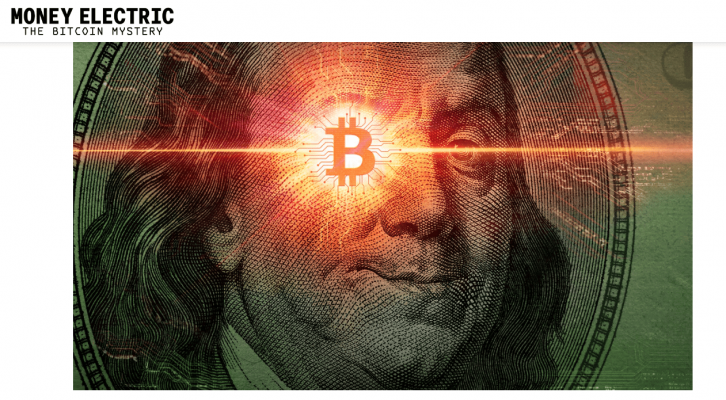
On October 8 at 9 pm, the network is releasing the documentary “Money Electric: The Bitcoin Mystery,” which claims to reveal the true identity of Satoshi Nakamoto, the creator of Bitcoin.
The documentary is directed by Cullen Hoback, who made a name for himself by exposing conspiracy theory leader QAnon, the 8kun website administrator Ron Watkins in a 2021 documentary series for HBO. Watkins denied he was a Q, but two separate linguistic studies showed he was, after assuming the mantle of South African software engineer Paul Ferber. If Hoback does succeed in determining Satoshi’s true identity, it would end years of mystery.
Previous attempts to figure out Satoshi’s identity failed
In 2014, Newsweek journalist Leah McGrath Goodman published an article titled “The Face Behind Bitcoin” in which she named Dorian Satoshi Nakamoto, a Japanese-American from California, as the creator of Bitcoin. But Dorian Nakamoto denied that he had ever heard of Bitcoin and categorically denied being its creator. Other journalists later refuted Goodman’s article.
In 2015, tech publication WIRED published an article suggesting that Australian computer scientist Craig Wright could be the inventor of Bitcoin. After the article was published, Wright began actively telling the media that he was Satoshi. But it soon became clear that Wright, who has a history of questionable business dealings and behavior, had made the whole thing up, probably to cover up his ongoing problems with the Australian Taxation Office, as well as to make money by copyrighting the Bitcoin White Paper.
Wright also sued Bitcoin developers and the family of a former employee in an attempt to gain court-ordered access to Satoshi’s treasure trove of untouched 1.1 million Bitcoins (which he claimed he lost access to after damaging the hard drive where his private keys were stored). He also sued – and threatened to sue – anyone who suggested he was a fraud, including podcaster Peter McCormack and former public school teacher Magnus Granat (aka Hodlonaut).
But Wright was in fact a fraud. A UK court this year finally ruled that Wright was not Satoshi Nakamoto, and ordered Wright to publicly release admissions that he was not the creator of Bitcoin on his website and social media accounts. Wright has promised his ever-dwindling number of supporters to appeal the decision.
Fearing another public failure, the media has so far refrained from publicly naming another candidate for this enigmatic identity. Meanwhile, the crypto industry itself has largely come to a consensus that Satoshi Nakamoto’s identity is best left secret. US cryptocurrency exchange Coinbase even called Satoshi’s unmasking a potential business risk.
However, the public’s curiosity about Satoshi’s true identity has not diminished. Strong arguments have been made that the creator of Bitcoin could have been any one of several early crypto punks.
Some of the most commonly cited potential Satoshis are programmer Hal Finney (who died in 2014 and lived near Dorian Satoshi Nakamoto), Bit Gold creator Nick Szabo, Hash Cash developer Adam Back, and b-money creator Wei Dai. All of them deny being Satoshi. Less common theories point to former programmer and head of the criminal cartel Paul Le Roux (who is currently in prison) or the Central Intelligence Agency (CIA). Others believe that Satoshi was not one person, but a group of programmers working together.
One of the most popular candidates for Satoshi Nakamoto’s identity was programmer and cyberpunk artist Len Sassaman, who committed suicide in 2011, shortly after Satoshi stopped posting on BTCTalk, one of the first forums for discussing cryptocurrencies.
Galaxy Digital’s Alex Thorn wrote on X that identifying Sassaman as Satoshi in the HBO documentary would not affect Bitcoin, or affect it positively given that Sassaman is dead. The fact is that if Satoshi is still alive and has access to the 1.1 million BTC tied to him, and if those holdings are ever sold, it could theoretically lower the price of the asset dramatically.
As with Finney, Szabo, Back, and others, a compelling argument has been made that Sassaman could have been Satoshi. However, a compelling argument is not the same as proof. While there are hints of “never-before-seen evidence” in the new HBO documentary, the real “trump card” would be Satoshi’s coin movements — something none of the contenders have been able to do.
If Satoshi is dead or unwilling to go public — even for access to a treasure trove of Bitcoins worth an estimated $68 billion at today’s value — that evidence may never come to light.
