
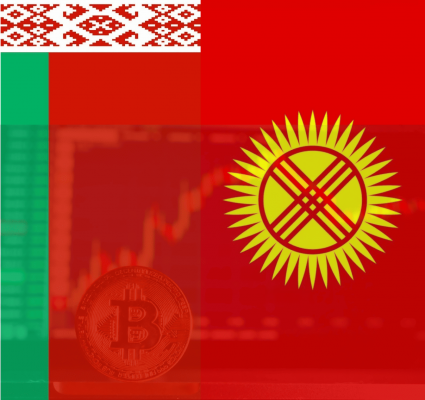
- Belarus Adopts Cryptocurrency to Counter Sanctions
- Economic Pressure and Sanctions Challenges
- Opportunities for Businesses and Investors
Kyrgyzstan has rapidly emerged as a key hub of the crypto industry in Central Asia, opening up broad opportunities for digital asset operations. Since early 2022, the country has been actively building a legal framework for crypto businesses, issuing over one hundred licenses to virtual asset service providers (VASPs). The launch of the first state-backed crypto exchange and official support for P2P trading have made Kyrgyzstan’s market attractive and convenient for traders and investors alike. These steps are creating favorable conditions for startups, DeFi projects, and integration with global payment systems.
At the same time, despite increasing transparency and regulatory progress, some platforms in Kyrgyzstan are linked to Russian companies using crypto infrastructure to bypass sanctions. This also highlights the rapid growth of blockchain networks as tools for resilient financial interaction.
Belarus Adopts Cryptocurrency to Counter Sanctions
Much like Kyrgyzstan, Belarus is also pushing toward digitalizing its economy through cryptocurrency adoption. President Alexander Lukashenko has emphasized the importance of expanding the use of digital assets in the banking sector to mitigate the negative impact of Western sanctions.
“Today, transactions using cryptocurrency are more active than ever, and their role in payments continues to grow,” Lukashenko stated at a meeting on Tuesday with representatives of the National Bank and executives from the country’s leading commercial banks.
According to Lukashenko, external payments made via exchanges reached $1.7 billion in the first seven months of this year, with estimates suggesting the figure could climb to $3 billion by December.
He also highlighted the role of tokenization in the financial sector, which, in his words, could help “minimize the role of intermediaries, automate transactions through smart contracts, and strengthen user control over their assets,” according to an official transcript.
Later, the president called on Belarusian banks to expand the use of digital assets, framing this as both a response to sanctions and a way to ensure stable cross-border payments.
“Digitalization here is not for its own sake, but for real economic impact,” he added.
Belarus now plans to roll out tokenized financial operations, minimizing intermediaries, automating settlements with smart contracts, and giving users stronger control over their funds. Lukashenko also instructed banks to expand the adoption of digital payment systems—including QR code payments and instant payment platforms—to improve efficiency and convenience.
Economic Pressure and Sanctions Challenges
Both Kyrgyzstan and Belarus face intense economic pressure due to Western sanctions. In this environment, crypto is increasingly seen as a tool to bypass restrictions, enabling alternative channels for international transactions and capital preservation.
For example, Kyrgyzstan has become a platform where Russian companies use crypto exchanges to move funds and acquire dual-use components, while Belarus is building regulations and technologies aimed at stabilizing its financial system.
Opportunities for Businesses and Investors
Both countries present unique opportunities for businesses and investors in the crypto and digital asset sectors. In Kyrgyzstan, the ecosystem supports licensed crypto companies, thriving P2P trading, and state-backed initiatives fostering market development. In Belarus, policymakers are pushing regulation further, with plans for a crypto bank and an expanded legal framework—initiatives that could attract fresh investment and skilled professionals.
Together, Kyrgyzstan and Belarus are shaping market conditions that position cryptocurrency not only as a tool for financial transactions but also as a driver of digital transformation, economic resilience, and international trade in an era of sanctions-driven challenges.
