
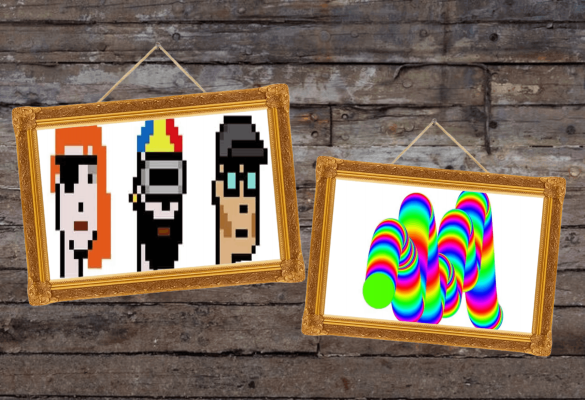
- A Historically Significant Acquisition
- Why These Projects?
- How the Exhibition Will Change
- What Comes Next?
The Museum of Modern Art (MoMA) has announced the inclusion of two landmark digital art NFT projects—the CryptoPunks collection and the Chromie Squiggles series—in its permanent exhibition. This marks a significant milestone, signaling the growing importance of digital art and its recognition by leading cultural institutions.
A Historically Significant Acquisition
Non-fungible tokens (NFTs) have become a symbol of the artistic revolution of recent years due to their defining characteristics: each token is unique and serves as verifiable proof of authenticity, ensuring copyright protection and transactional transparency. Despite initial skepticism from the traditional art world, digital art has steadily gained widespread acceptance.
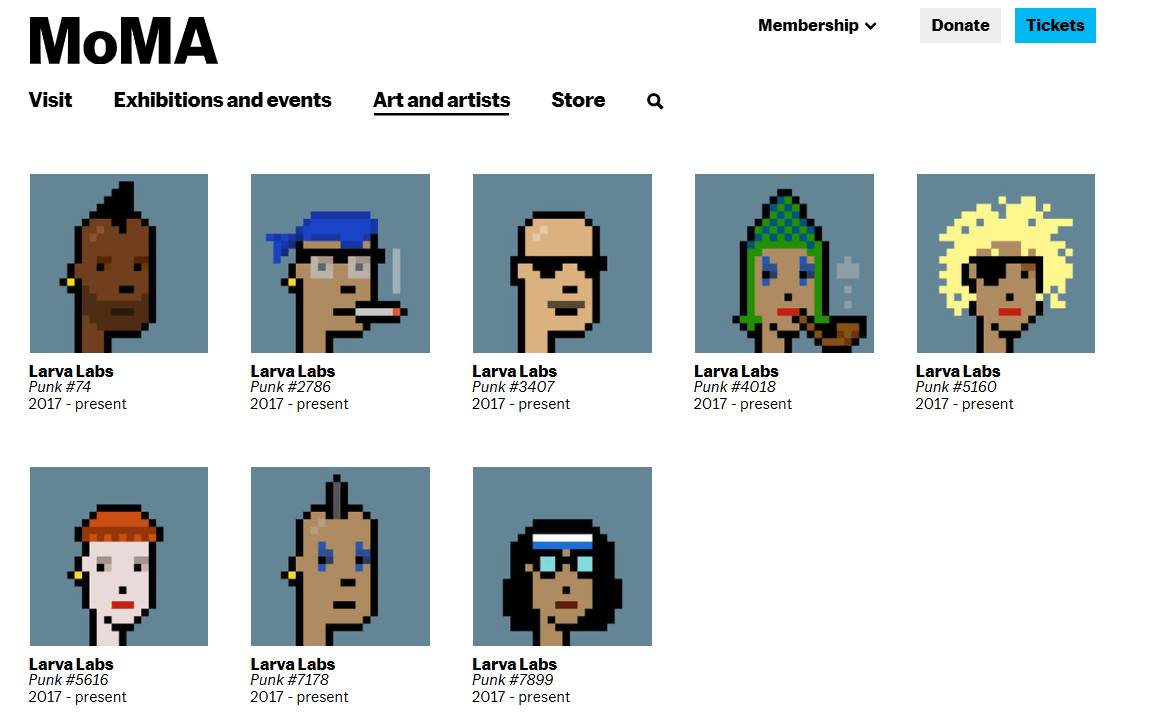
Created by Larva Labs in 2017, CryptoPunks is a series of pixelated character portraits, each with its own distinct traits and facial features. These characters have become iconic within the cryptocurrency and digital art communities. Now, selected CryptoPunks will be displayed as part of MoMA’s permanent exhibition, alongside works by internationally recognized 20th-century artists.
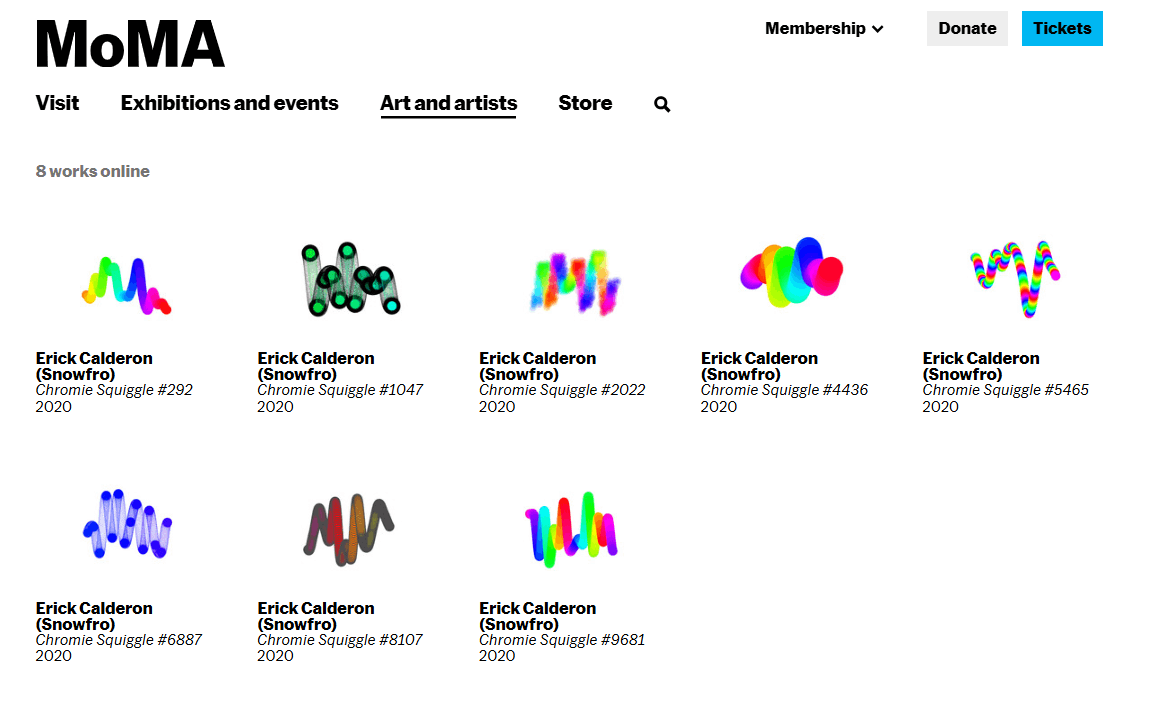
Chromie Squiggles, a project by Art Block—a generative artist of Art Blocks—stands out for its use of algorithms and randomness to create unique abstract compositions. Each line is generated individually, emphasizing the role of chance and unpredictability in the creative process.
Together, these two projects symbolize the transition of digital culture from a fringe subculture into the mainstream cultural canon.
Why These Projects?
MoMA’s Director of New Media, Larry Fink, explained the museum’s decision:
“We see CryptoPunks and Chromie Squiggles as defining symbols of the early era of decentralized art—art that is open to the world and accessible to everyone. Their inclusion in our collection reflects a shift in how we understand creativity and ownership in art.”
Experts emphasize that incorporating NFT collections into museum holdings represents the integration of new artistic formats into traditional institutional frameworks. According to MoMA curator Sofia Kalmykova, digital artifacts are becoming an integral part of humanity’s cultural memory, forming a new chapter in the history of 21st-century art.
“This is a major step forward for everyone in the NFT market. It proves that our work is now officially recognized as fine art—just as important as Picasso’s paintings or Rodin’s sculptures,” said Art Block, creator of Chromie Squiggles.
How the Exhibition Will Change
The acquisition of these works will lead to the creation of a dedicated space within the museum focused exclusively on digital art. Visitors will be able to explore interactive presentations of each collection and trace the evolution of digital art over recent years. All 16 works—which were donated rather than purchased—will be housed in MoMA’s Media and Performance department, alongside video art, experimental technologies, and other new media works. The pieces can also be viewed on MoMA’s official website.
The CryptoPunks added to the collection include numbers 74, 2786, 3407, 4018, 5160, 5616, 7178, and 7899. Larva Labs founders Matt Hall and John Watkinson donated CryptoPunks #74 and #5160. Other donors include Mara and Eric Calderon (CryptoPunk #2786), Raidon and Caroline Lee (#3407), Ryan Zurrer of 1OF1 AG (#4018), judithESSS (#5616), the Tomaino family (#7178), and the Cozomo de’ Medici collection (#7899).
The acquisition of Chromie Squiggles was similarly organized through community donations. Contributors included SquiggleDAO, gmoneyNFT, jdh, VonMises14, and several anonymous collectors, according to 1OF1_art, who helped coordinate both donations.
The exhibition will also feature special events and lectures explaining blockchain technology and the mechanics of NFTs, introducing a broader audience to the world of digital art.
Karen Rossmann, Head of Development and Partnerships at MoMA, commented:
“Our goal of introducing the public to new forms of contemporary culture has been supported by the museum’s leading sponsors, who recognize the importance of promoting innovative art practices in an era of technological progress.”
What Comes Next?
The integration of crypto art into traditional museum practice opens new opportunities for artists and art markets alike. Experts predict that museums worldwide will increasingly seek to acquire NFT projects, fostering the growth of digital artist ecosystems and drawing greater public attention to blockchain-based art.
Felix Carter, a researcher at Columbia University’s Center for the Study of Contemporary Arts, noted: “MoMA’s decision to include NFTs in its collection will act as a catalyst for the academic recognition of digital art, expanding the boundaries of what is possible for young creators and investors alike.”
