
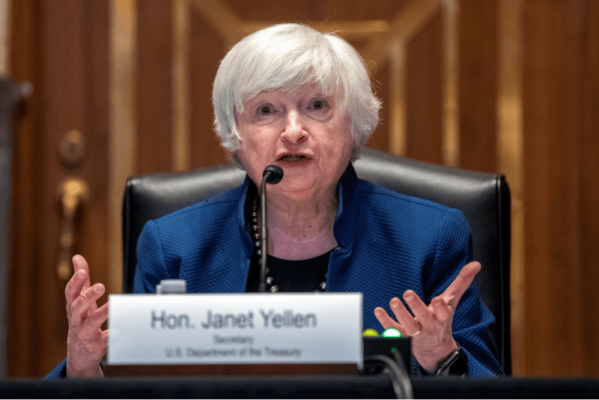
- SEC and CFTC cannot agree: Treasury Secretary Yellen is not happy
- The chorus of disgruntled voices grows stronger along with the FTX investigation
US Treasury Secretary Yellen added her voice to the growing chorus of Washington leaders demanding action after the collapse of cryptocurrency exchange FTX, saying November 16 that the collapse demonstrated “the need for more effective oversight of cryptocurrency markets.”
Janet Yellen said in a statement that reports prepared by the Treasury Department in response to President Biden’s September executive order on digital assets identified many risk factors affecting the FTX collapse and subsequent bankruptcy, implying that had those reports been turned into policy, the disaster could have been prevented.
“Some of the risks we identified in these reports, including comingling of customer assets, lack of transparency, and conflicts of interest, were at the center of the crypto market stresses observed over the past week,” said the Treasury Secretary.
Despite these reports, there is so far no comprehensive framework to bring cryptocurrency together under a single federal regulatory umbrella.
SEC and CFTC cannot agree: Treasury Secretary Yellen is not happy
Regulators such as the Securities and Exchange Commission (SEC) and the Commodity Futures Trading Commission (CFTC) have stalled on issuing specific guidance to cryptocurrency companies and exchanges, though both agencies have periodically taken enforcement action against certain cryptocurrency companies. Meanwhile, federal lawmakers are currently mulling legislation that would clarify the regulation of cryptocurrencies, though no such bill has yet come up for a vote.
Washington saw an urgent need to take on a larger role in overseeing the cryptocurrency market after the stunning destruction of the once-dominant FTX and its trading subsidiary Alameda Research. A report surfaced last week showing that nearly half of Alameda’s $14 billion balance sheet consisted of FTT, the utility service token used to get discounts on trading fees on the FTX platform. Sam Bankman-Fried, founder of FTX and Alameda, has long insisted that the two companies are separate legal entities.
This story and its devastating impact on hundreds of thousands of customers has given regulators and lawmakers in Washington more reason to target the crypto industry.
US Treasury Secretary Yellen sought to galvanize not only federal agencies such as the SEC, but also lawmakers in her call for more regulatory action.
“The federal government, including Congress […] needs to move quickly to fill the regulatory gaps the Biden Administration has identified,” the Treasury Secretary said.
But Yellen also laid some of the blame on federal regulators, pointing out that they failed to use laws already in place to prevent the current market turmoil.
“We have very strong investor and consumer protection laws for most of our financial products and markets that are designed to address these risks,” said Yellen. “Where existing regulations apply, they must be enforced rigorously so that the same protections and principles apply to crypto assets and services.”
The risks of failing to effectively regulate cryptocurrency – either by using existing laws or by creating a new framework – could be far more disruptive and far-reaching than even the current environment, the Treasury Secretary warned.
“Spillovers from the events in crypto markets have been limited,” Yellen said. “But […] further interconnections of the traditional financial system and crypto markets could raise broader financial stability concerns,” she said.
The chorus of disgruntled voices grows along with the FTX investigation
An audit of the firm’s accounts revealed that it had 20,176.84 bitcoins in its account on Nov 5, 220.26 bitcoins on Nov 6 and just 0.25BTC on Nov 7. This explains the rejection of the purchase, which was agreed by Binance and FTX.
The exchange’s total debt has also been estimated: FTX owes 10 companies $1.45 billion, the total debt to creditors from the list of the top 50 is estimated at almost $3.1 billion, and it was found that the document flow in the company was very poor, the employees failing to pay proper attention to the financial and accounting documents.
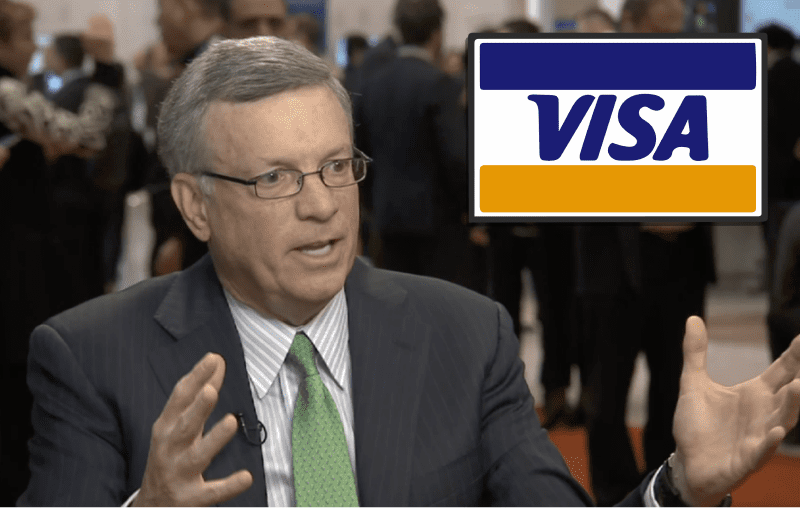
Alfred Al Kelly, CEO of the VISA international payment system, expressed hope that the FTX fiasco will accelerate tighter regulatory scrutiny of the cryptocurrency market:
“I hope one good thing that comes out of this FTX disaster for their investors and their employees, is that we see an acceleration towards regulation… I think that that is what’s necessary to build back confidence for people.”
