
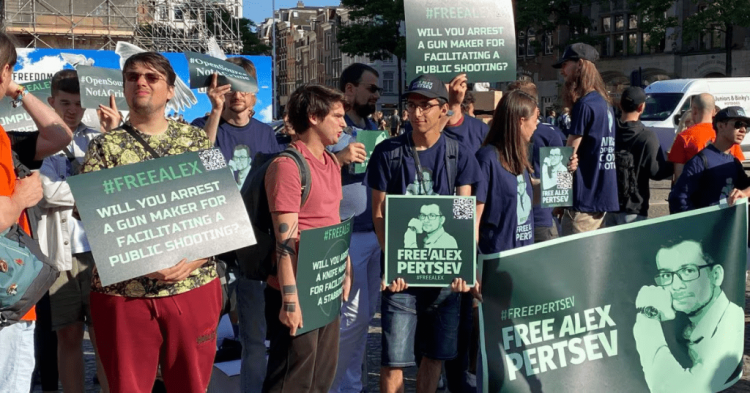
The conviction of Tornado Cash developer Alexey Pertsev reinforces a very broad interpretation of criminal liability, which has serious implications for blockchain. The conviction of Alexey Pertsev, the developer of the Tornado Cash coin-mixing protocol, stems from a frightening interpretation of criminal liability that is likely to have broader implications for cryptocurrencies.
Pertsev must serve a sentence of five years and four months for money laundering with Tornado Cash. This is despite the fact that Pertsev had nothing directly to do with the laundering as such.
Andrew Balthazor, a litigator with the legal firm Holland and Knight, explained the implications of the verdict.
“Mr. Pertsev’s conviction reinforces the views of several governments that software developers who make their software available to the public will be held liable for the foreseeable consequences of the public’s use of that software,” said Balthazor.
“Under this theory of liability, it is no defense to disclaim knowledge of a specific criminal act or to point to the software’s technical limitations in preventing its misuse by criminal actors. […] It is the developer’s responsibility to create mechanisms to reduce or prevent foreseeable criminal use of their software.” ”
When asked if the governments taking that view included the US Balthazor said, “Yes, that appears to be the position of the US as demonstrated by the Tornado Cash indictments brought domestically by the Department of Justice.”
This interpretation of liability differs significantly from how most understand it in the traditional sense. Natalia Latka, director of public policy and regulatory affairs at blockchain analytics firm Merkle Science, explained how legal attitudes toward software development have evolved over time.
“Historically, software developers were seen as neutral creators of tools and platforms, responsible for their technical functionality but not for how those tools were used,” said Latka. “This perspective largely stemmed from the idea that technology itself is neutral, and its use depends on the intentions of the users. This perspective has been shifting, especially with the rise of decentralized networks that challenge traditional regulatory frameworks.”
Latka explained that developers “must now consider the legal implications and potential misuse of their creations.”
The impact of the court’s decision on the industry
The crypto community was quick to recognize the importance of the Pertsev trial, voicing condemnation of the verdict on social media.
Eléonore Blanc, founder of CryptoCanal — the events firm behind the ETHDam conference in Amsterdam — thought to ask whether “Tornado Cash” could not just as easily be “any cryptocurrency of your choice.”
“They’ve systematically disregarded all arguments from the defense,” she said. “As such, you can easily extrapolate and see how this specific court verdict could be interpreted at a larger scale to more use cases in the crypto industry. As crypto builders, we are all Alexey. We keep fighting for him, his legacy and the cypherpunk values.”
Risks to immutability and decentralization
The first and most obvious casualty of the Tornado Cash solution may be privacy, but that’s not the only problem associated with this case. The immutability of blockchain and smart contracts is also at risk.
“This theory of liability renders immutable smart contracts highly risky for developers to make available to the public,” said Balthazor.
“Reducing risks to developers may require publicly available programs be amendable so that software developers can respond to law enforcement or regulators’ requirements.”
“For example, certain stablecoin issuers possess a feature allowing the stablecoin to blacklist blockchain addresses controlled by sanctioned entities. Failing to include such a feature would increase the risk to those issuers of their stablecoins being used by sanctioned entities,” he said.
Balthazor came to a conclusion that the ruling “increases the risks associated with decentralized projects” because their “decentralized nature may make course corrections difficult due to the consensus needed to make major code or operational changes.”
Crackdown
Given that Pertsev received such a harsh sentence, it’s understandable that blockchain developers are now nervous about potential lawsuits.
Latka said that “compliance by design” will become “crucial for developers and organizations in the crypto space. This involves integrating regulatory compliance into the design and development process from the outset.”
This is because “courts will assess whether developers knowingly created tools for illegal purposes or were willfully blind to their misuse, with evidence of intent or negligence significantly impacting legal outcomes.”
But if developers have to sacrifice privacy, immutability and decentralization to protect themselves and make their protocols compliant by design, what will be left of blockchain?
