
- Mythos and a Global Threat: Why Central Banks Sounded the Alarm
- DeFi Vulnerabilities: Why Smart Contracts Aren’t the Main Target
- Hacking Statistics: Billion-Dollar Losses and the Role of Neural Networks
- A New Reality for DeFi: Between Openness and Security
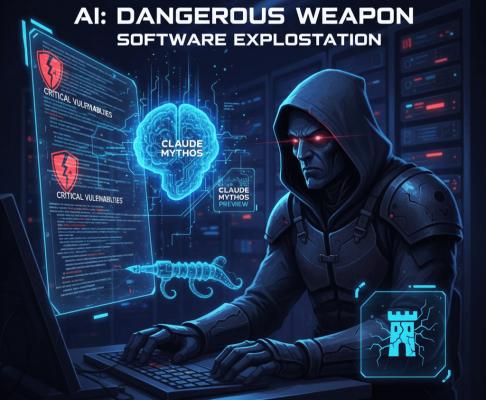
In recent years, artificial intelligence (AI) has evolved from a “future technology” into a powerful, widely deployed tool across industries—from healthcare to finance. But alongside its clear advantages, AI is introducing new risks. These concerns have become especially acute with the emergence of advanced language models like Anthropic’s Claude Mythos Preview. Such systems can not only process vast datasets but also identify critical software vulnerabilities, effectively turning them into dangerous tools in the hands of hackers.
The cryptocurrency market—built on decentralization and transparency—has proven particularly exposed. While traditional banks can quickly patch security gaps, the architecture of decentralized finance (DeFi) doesn’t always allow for rapid response to newly discovered threats.
Mythos and a Global Threat: Why Central Banks Sounded the Alarm
The first warnings didn’t come from the crypto community, but from traditional finance. Leaders of major central banks, including the Bank of England and the European Central Bank (ECB), have publicly raised concerns about serious cyber risks tied to AI development.
Andrew Bailey, Governor of the Bank of England, described the situation as a “very serious challenge,” noting that regulators will need to assess emerging threats at an accelerated pace. ECB President Christine Lagarde, President of the ECB, explicitly pointed to Mythos as an example of a technology that, if it falls into the wrong hands, could have catastrophic consequences for global financial stability.
Executives at major global banks—including JPMorgan, Morgan Stanley, BNY, and Citigroup—have echoed these concerns. During testing of similar beta AI tools, they reported discovering “numerous vulnerabilities” requiring immediate attention. The issue has clearly moved beyond crypto and into the realm of national and international security.
DeFi Vulnerabilities: Why Smart Contracts Aren’t the Main Target
For years, the primary perceived risk in blockchain projects was bugs in smart contract code. Recent developments suggest otherwise: many critical vulnerabilities lie in the surrounding infrastructure rather than in the contracts themselves. These components have become prime targets for AI-assisted attacks:
1. Access key management systems: If compromised, attackers can gain full control over user funds.
2. Price oracles: Manipulating asset price feeds enables arbitrage attacks and fund extraction from protocols.
3. Cross-chain bridges: Among the most complex and vulnerable components, bridges connect different blockchains and facilitate massive value transfers.
Traditional security audits tend to focus on static analysis of smart contracts and often overlook these elements. AI models, by contrast, can dynamically analyze interactions across systems, uncovering logical flaws and weaknesses that human reviewers may miss.
Hacking Statistics: Billion-Dollar Losses and the Role of Neural Networks
The numbers are stark. In April alone, attackers inflicted at least $570 million in damage on the crypto market. Year-to-date losses have reached approximately $800 million.
The most high-profile incident was the hack of the Kelp DAO cross-chain bridge, which resulted in $290 million in stolen funds. The attack triggered a domino effect: not only were the bridge’s users affected, but issues also spread to users of the major lending protocol Aave, along with dozens of other projects that were forced to suspend or limit operations.
Many researchers directly link the sharp increase in both the frequency and sophistication of attacks to the rise of powerful neural networks. AI enables automated vulnerability discovery and the rapid creation of exploits—malicious code used to breach systems—at unprecedented speed and efficiency.
A New Reality for DeFi: Between Openness and Security
Unlike traditional banks, which can deploy emergency patches to their servers, DeFi operates under different constraints. Its core principles are openness and immutability. If a critical flaw is discovered in a smart contract already deployed on mainnet—especially with the help of AI—it cannot be fixed instantly.
Upgrading decentralized protocols typically requires governance approval from token holders (via DAOs), a process that can take days or even weeks. During that time, the protocol remains vulnerable. Hackers leveraging AI to identify weaknesses gain a significant window of opportunity to strike while the community works toward consensus.
Conclusion: The Arms Race Has Begun
The advancement of AI has sparked a new arms race in cybersecurity. On one side are hackers using tools like Mythos to identify and exploit weaknesses. On the other are developers and security auditors who are increasingly adopting AI to defend their systems.
For the crypto industry, this means a fundamental shift in how security is approached. Code audits alone are no longer sufficient. What’s needed are multi-layered defense systems, continuous infrastructure monitoring, and emergency response mechanisms that preserve the core principles of decentralization. Without these changes, the multi-billion-dollar DeFi ecosystem risks becoming a primary target for a new generation of cybercriminals.
