
- New rules for banks: Central Bank introduces crypto risk caps
- Restrictions for non-bank institutions: Central Bank Board gains direct control
- Business legalization: Companies allowed to buy crypto through intermediaries starting 2026
- Legislative context
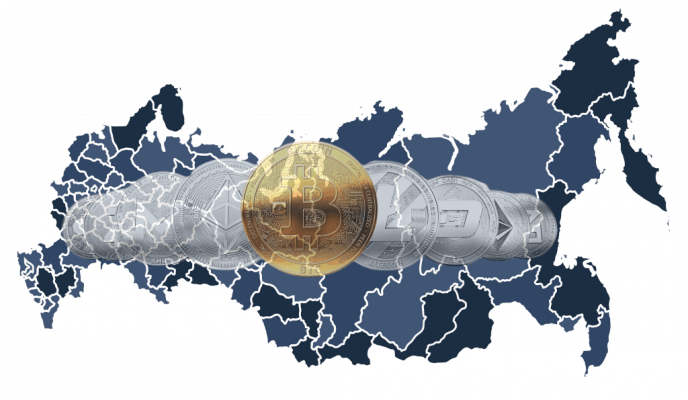
Russia has taken a decisive step toward building a transparent and regulated digital asset market. The government has submitted a package of amendments to the State Duma that significantly reshapes the rules for banks, financial institutions, and businesses. The proposal introduces direct oversight by the Central Bank of Russia (CBR) and legalizes cryptocurrency transactions for legal entities through licensed intermediaries.
New rules for banks: Central Bank introduces crypto risk caps
The Central Bank will receive unprecedented authority to manage risks related to digital assets. The key change is the introduction of a new mandatory prudential metric: a maximum crypto exposure limit.
This means the regulator will be able to set individual limits on digital asset exposure for each bank. Institutions that choose to actively participate in the crypto market — whether trading on their own balance sheet or on behalf of clients — will face stricter capital and liquidity requirements.
“Amendments extend to the crypto market a principle already applied to banks working with mortgage-backed securities. If a bank wants exposure to higher-risk assets, it must maintain sufficient capital buffers,” industry experts note.
Importantly, this is not a sudden move. Back in May 2025, the Central Bank issued a guidance letter signed by First Deputy Governor Dmitry Tulin recommending that banks limit crypto-linked investments to no more than 1% of capital. The new legislation effectively transforms that recommendation into a legally binding requirement.
Restrictions for non-bank institutions: Central Bank Board gains direct control
The draft law also grants the Central Bank’s Board of Directors the authority to quickly introduce or lift restrictions on cryptocurrency transactions for non-bank financial institutions.
This applies to: insurance companies, microfinance organizations, pawnshops, other non-bank financial market participants
The proposed control mechanism works as follows:
The Central Bank Board adopts a decision to prohibit specific digital asset transactions or foreign digital rights.
The restriction must be officially published within 10 days.
This flexible framework allows regulators to respond rapidly to market risks and safeguard financial stability by limiting participation from institutions that lack sufficient risk-management capacity.
Business legalization: Companies allowed to buy crypto through intermediaries starting 2026
The most significant change for the real economy will take effect in July 2026. If the bill is passed, Russian companies will gain a legal pathway to purchase cryptocurrencies.
However, direct access to crypto exchanges will remain prohibited for businesses. Instead, transactions will only be permitted through licensed intermediaries listed in a special Central Bank registry:
Currency exchange operators — licensed currency exchange providers
Brokers — licensed securities market intermediaries
Trust managers — licensed asset management companies
This structure creates a clear chain of accountability, allowing authorities to monitor capital flows and ensure proper taxation of crypto transactions.
Legislative context
The proposed amendments build on the previously adopted Mining Law, which legalized cryptocurrency mining in Russia. That law classified miners into two categories:
• Those who introduce mined assets into circulation
• Those who mine without bringing assets into financial circulation
The new amendments address the final major gap — rules governing the circulation of digital assets within the financial system. This development is particularly important in the context of cross-border payments. Digital assets are increasingly viewed as a key tool for international settlements under sanctions pressure, and the government aims to move these flows from a regulatory gray zone into a fully legal framework.
As a result, Russia appears to be developing a hybrid regulatory model:
• Strict domestic oversight by the Central Bank
• Continued use of digital assets for international trade and cross-border payments
This approach could position Russia as one of the first major economies to combine tight internal regulation with strategic external crypto usage.
